

SMU’s new Asia Ready Conversations brings regional realities into focus
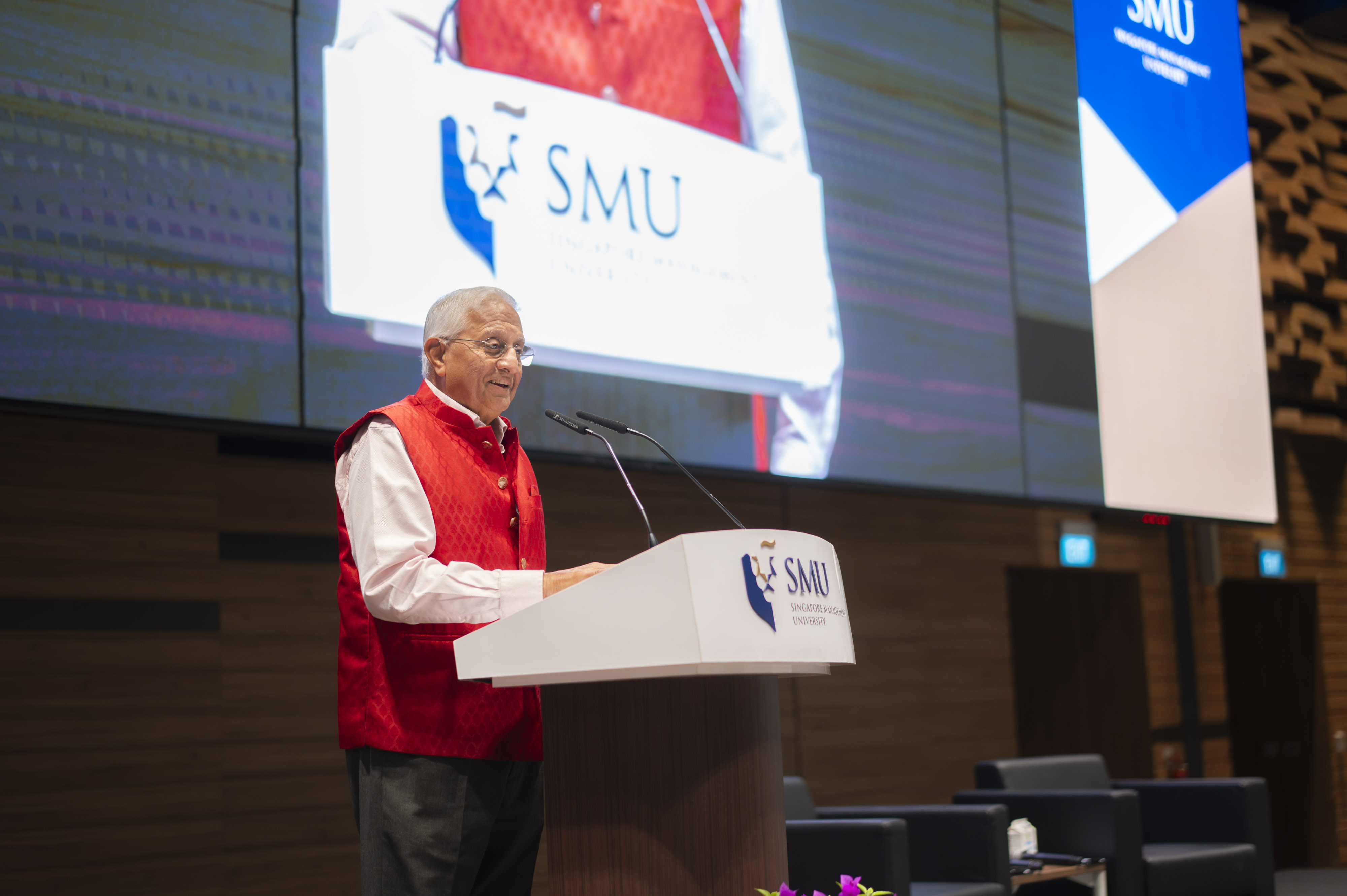
India and China’s historic, cultural and economic influence on Asia took centre stage as SMU launched Asia Ready Conversations (ARC), a new initiative connecting students directly with leaders and thinkers shaping the region.
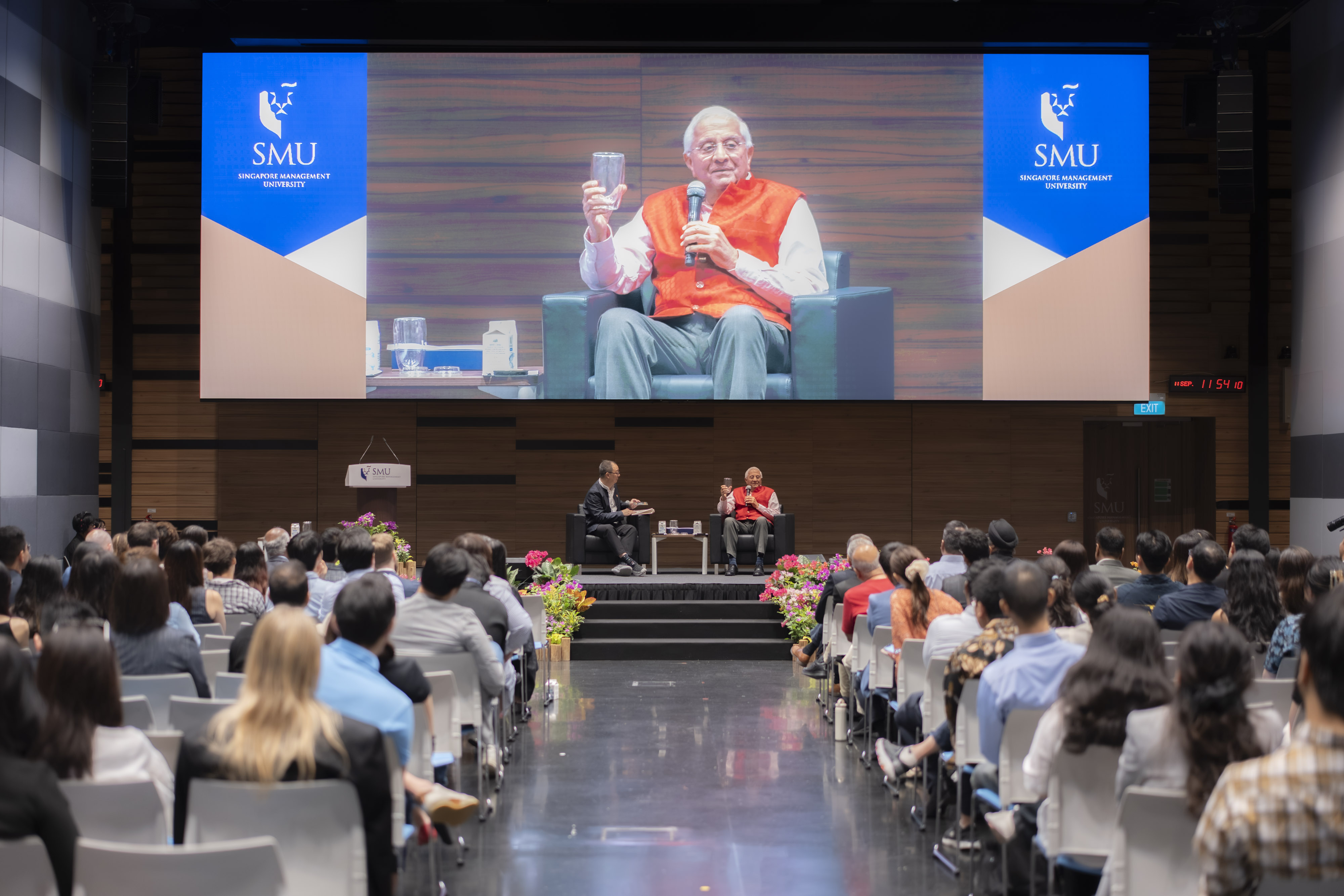
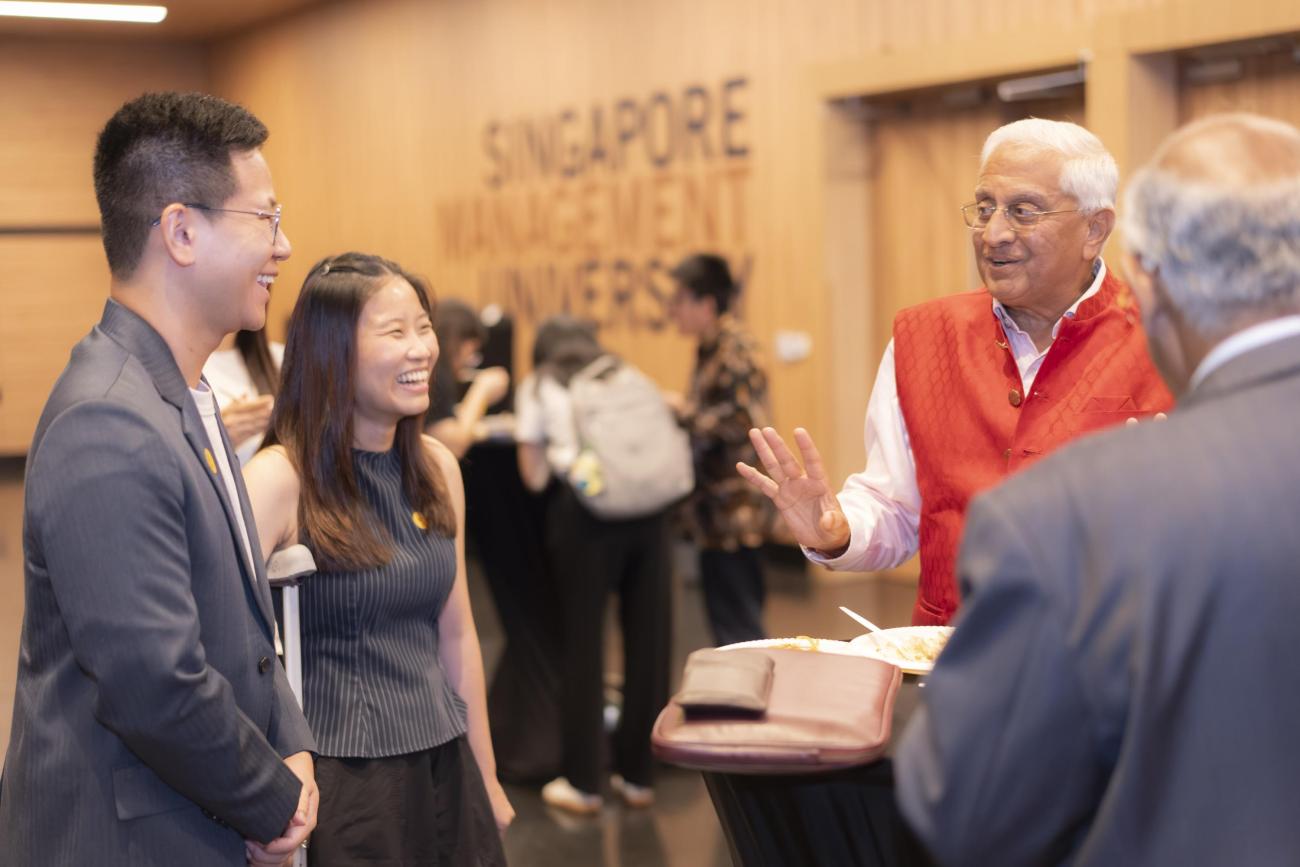
The inaugural session, held on 11 September 2026, featured Mr R. Gopalakrishnan, CEO of Mindworks and author of 21 books on business and leadership, in conversation with Associate Professor Themin Suwardy, SMU’s Associate Provost (Postgraduate Professional Programmes).
Titled “India, China and the Future of Asia: Navigating Opportunity and Change”, the fireside conversation drew on Mr Gopalakrishnan’s more than five decades of experience in some of India’s most influential businesses. A professional manager since 1967, he has held senior leadership positions including Chairman of Unilever Arabia, Vice Chairman of Hindustan Lever and director of Tata Sons.
Drawing on his latest book, Chanakya and Sun Tzu: A Business Lens on Trade, Thought and Travel, co-authored with Nirmala Isaac, he explored how developments in India and China are reshaping Asia—and what these shifts could mean for businesses, organisations and emerging leaders.
Turning Asia readiness into lived experience
ARC has been launched alongside SMU’s Asia-Ready Education Framework, which sets out the University’s approach to developing graduates equipped to work and lead across Asia.
The framework takes students through three stages: understanding the region’s diverse cultures, societies and economies; gaining real-world exposure through immersive opportunities; and developing deeper expertise through sustained engagement in Asia.
ARC adds another dimension to that journey. Through conversations with business leaders, policymakers and other regional voices, students encounter perspectives beyond the classroom and test their understanding against the realities of a changing region.
Professor Venky Shankaraman, Vice Provost (Education Strategy and Innovations) at SMU, said: “Our aim is to help students make intentional choices throughout their time at SMU, so that their understanding of Asia is developed through a combination of academic learning, direct exposure and sustained engagement.
“ARC brings important perspectives into that journey, encouraging students to question assumptions and consider how developments across Asia will shape their work and leadership.”
For students, this makes Asia readiness a continuing practice: asking better questions, seeking perspectives that challenge their assumptions, and connecting regional developments to the decisions they may one day make as professionals and leaders.
The Asia-Ready @ SMU microsite supports this wider effort by bringing together Asia-related courses, programmes, events, overseas opportunities and student experiences from across SMU. The single gateway enables students to identify opportunities aligned with their interests and aspirations.
Learning to read the forces behind change
For the inaugural conversation, India and China provided a natural starting point for that process of inquiry.
Mr Gopalakrishnan said: “Future leaders must understand not only their economic development, but also the history, culture and ideas shaping how both countries engage with the region and the world.
“Conversations such as this can help students navigate that future with greater confidence.”
The session was attended by close to 150 students, faculty and members of the SMU community at SMU Hall, SMU Yong Pung How School of Law.
The launch of ARC underlined a simple idea: academic knowledge remains the foundation, but meaningful regional understanding also grows through encounters with people, ideas and experiences that challenge easy assumptions.
For graduates preparing to work in a region shaped by economic shifts, competing perspectives and increasingly interconnected interests, the ability to keep questioning may prove as important as knowing the answers.
Curiosity and adaptability are essential for Asia’s future, says R. Gopalakrishnan | SMU Newsroom