

Putting purpose and people at the centre of a changing academic world
For SMU, the question of how universities can serve society is increasingly important as academic institutions confront a world marked by fragmentation, technological change and complex social challenges.
This was the focus of a fireside conversation between SMU President Professor Lily Kong and London School of Economics and Political Science (LSE) President and Vice Chancellor Professor Larry Kramer at the inaugural SMU-LSE Global Forum, moderated by SMU Vice President (Impact) Scott Fritzen.
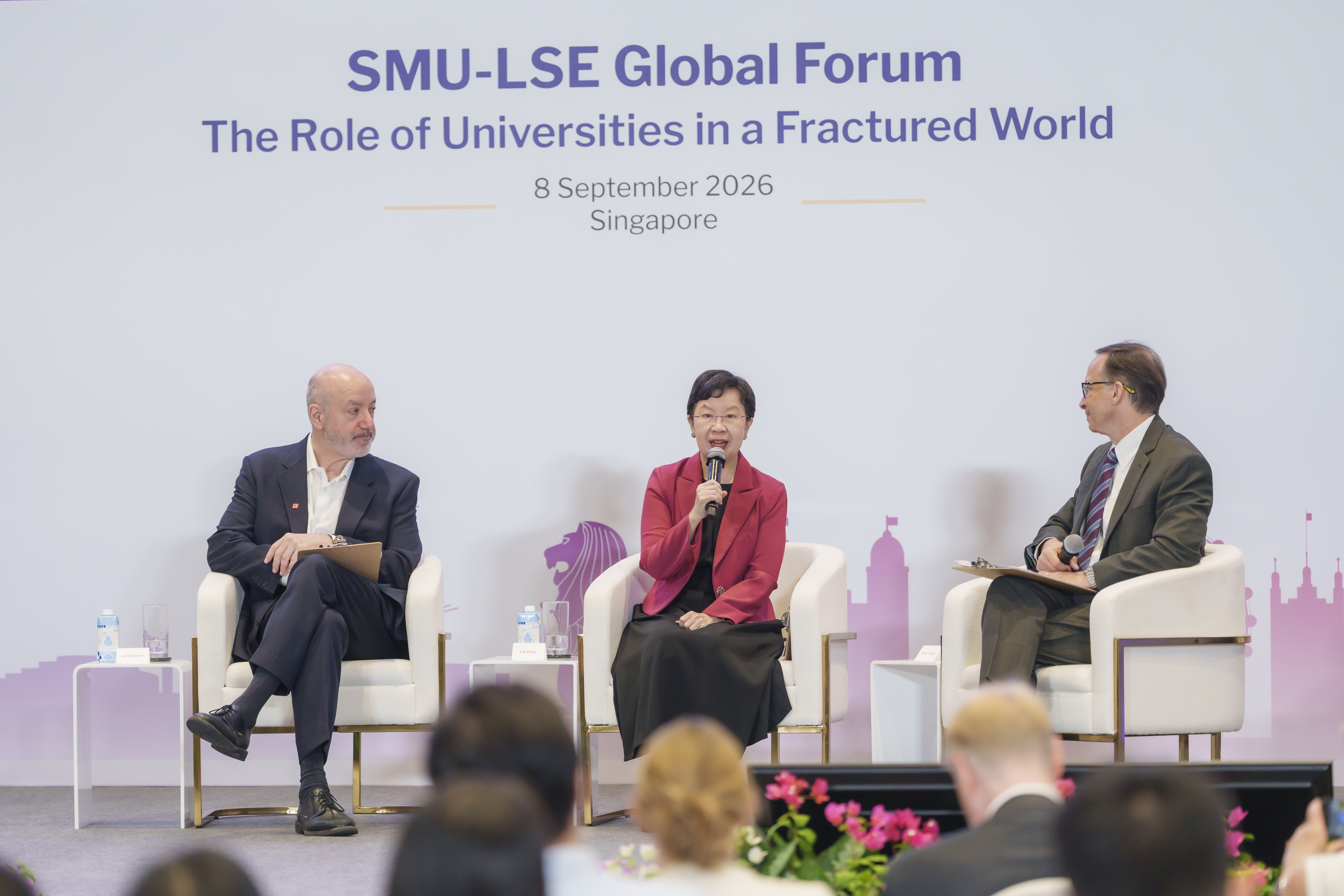
Professor Kong said, “Academics have been trained to think about publications, citations and rankings. But in an increasingly complex world, universities must ask themselves how they can make a difference.
“We must encourage academics to think beyond publications — how their work can make a difference to business, government and society — and how university systems and academic culture can better support them.”
She noted that policy and practice often draw on scholars’ work, even when change cannot be attributed to one person or study.
LSE’s Professor Kramer agreed, saying, “If you think about the problems that we face within our societies, there are few institutions that are better set up than universities to be able to think clearly about this.”
Professor Kramer said universities’ independence and culture of honest debate also position them to train “the generation of leaders” who will take ideas from universities and implement them in real life.
The message was clear: academic rigour and independence remain essential, but scholarship’s value extends beyond rankings, publications and citations. Universities need systems and cultures that recognise contributions to business, government and society.
From academic ideas to public value
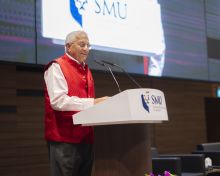
In her opening address, Singapore’s Senior Minister of State for National Development and Transport and LSE alumna Sun Xueling emphasised how universities help cities respond to change by developing talent, connecting knowledge across borders and turning research into practical solutions.
She said: “SMU and LSE are well-placed to observe first-hand how artificial intelligence and the digital economy impact businesses, residents and communities. By serving as living laboratories, universities can contribute to building resilient cities that evolve and respond to changing needs.”
British High Commissioner to Singapore Nik Mehta highlighted the partnership’s contribution to Singapore-UK ties, particularly education, which he described as the “golden thread” alongside free trade and international law.
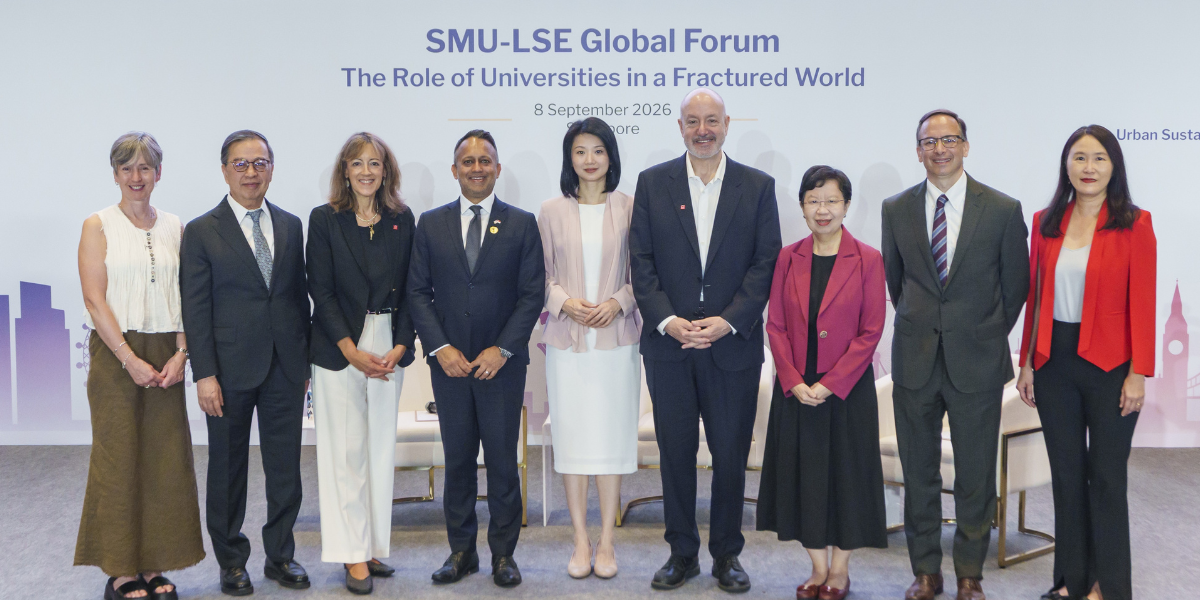
More than 150 participants attended, including diplomatic representatives, industry leaders, faculty and alumni from both universities.
The breadth of participation reflected the issues discussed: how knowledge moves across borders, institutions respond to technological and demographic change, and universities contribute beyond their campuses.
Three research questions, three tests of impact
This broader definition of impact was most clearly illustrated by research launched through the partnership.
The Forum marked the first major research milestone under the SMU-LSE strategic partnership, with three LSE-SMU Research Seed Fund projects examining urban sustainability, artificial intelligence and the future of work, and longevity and healthy ageing.
The first examines how data-centre growth in Johor, Singapore and London is reshaping land, energy, water and urban sustainability. Researchers will map the infrastructure, governance and cross-border flows behind digital economies, exploring tensions between smart-city ambitions and sustainable development.
The second explores how leaders use generative AI in decision-making, communication and self-reflection. Through interviews and experiments in Singapore and the UK, it will examine when AI enhances leadership and when it may undermine judgement, accountability and collaboration.
The third asks whether Singaporeans’ preference to age in place reflects informed choices or misconceptions about longevity and care needs. A large-scale survey experiment will test how information about ageing and care risks influences housing preferences, informing ageing and housing policies.
Together, the projects cross disciplines and national contexts while keeping a practical question in view: what can knowledge enable people and institutions to do differently?
A partnership designed for the questions ahead
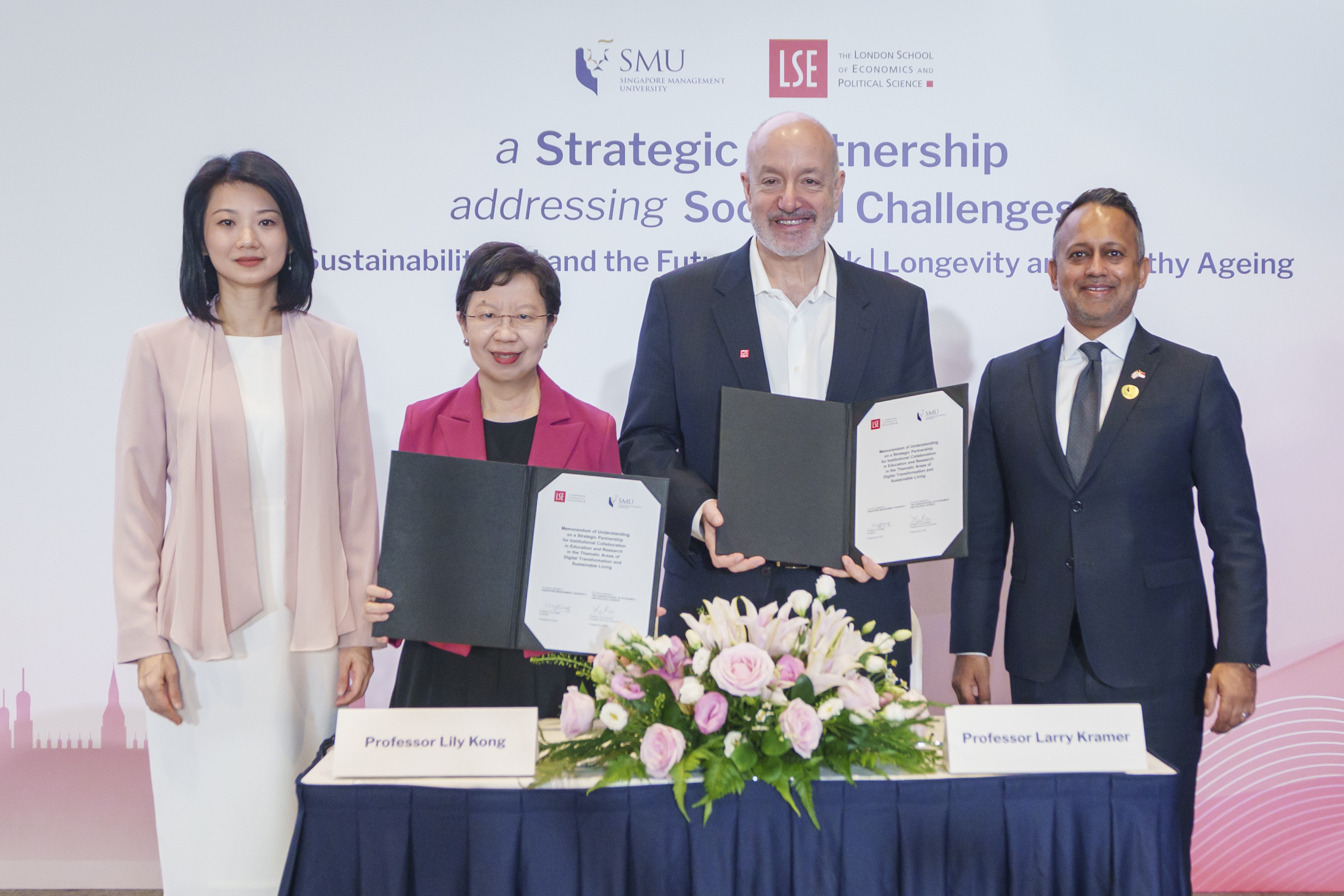
The SMU-LSE relationship became an institution-wide strategic partnership in early 2026, reflecting a shared commitment to tackling complex social challenges through interdisciplinary research and global engagement.
Its wider network includes the Global Alliance on Sustainable Urban Societies, founded in 2025 by SMU, LSE, Boston University, the University of Melbourne and the University of Toronto.
The alliance brings researchers together to examine how urban development can better respond to the needs of people and communities.
That focus returns to the Forum’s central question. If universities are to help societies think clearly about difficult problems, their contribution depends not only on producing knowledge, but on how it travels into policy, business, communities and the decisions of the leaders they educate.
For SMU and LSE, the partnership’s measure may therefore lie not only in what researchers publish, but in what their ideas make possible beyond the university.