SMU Administration Building sets a greener standard for energy efficiency
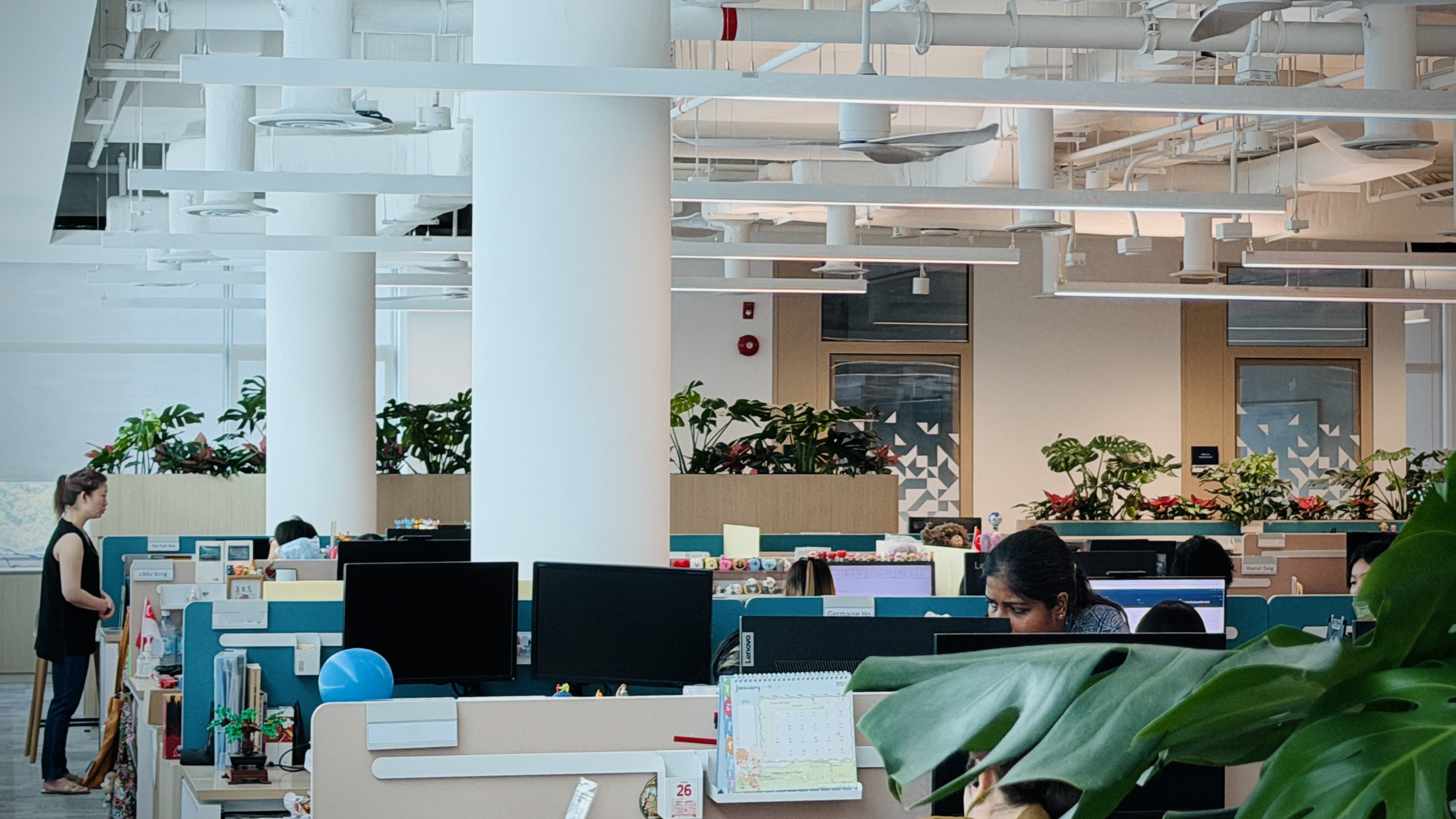
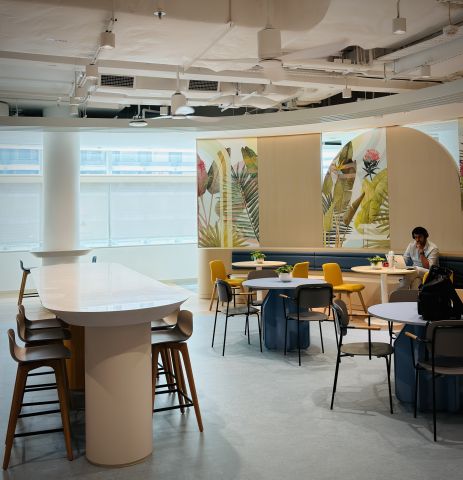
At SMU, in the newly retrofitted floors of its Administration Building, ceiling fans work alongside air conditioning to keep occupants comfortable while reducing energy spent on cooling. A seemingly modest adjustment, it forms part of a wider transformation in how the University manages its environmental footprint.
The comprehensive three-year retrofit of the Administration Building has achieved the Building and Construction Authority’s (BCA) Super Low Energy 60 (SLE60) rating. The achievement places SMU among 26 projects that successfully completed the pilot phase of BCA Green Mark Version 7 – Singapore’s refreshed green building certification scheme, which places greater emphasis on energy performance.
The recognition also comes with a compelling financial case: with an investment of approximately S$4m, the project demonstrates how building efficiency improvements can lower operating costs while supporting the university’s sustainability commitments.
Rethinking comfort, reducing consumption
Cooling is central to the Administration Building’s transformation. Rather than relying entirely on conventional air conditioning, SMU introduced a hybrid cooling system that combines it with ceiling fans to keep indoor temperatures at a comfortable 25.5°C.
Furthermore, chillers approaching the end of their operational lifespan were replaced, while existing air-handling units were optimised to improve efficiency.
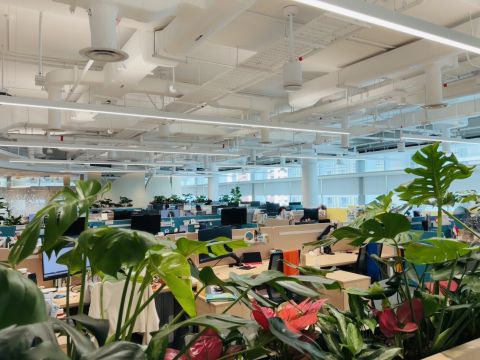
The changes also extend to how the building uses natural light. Sensors, automated blinds and lighting systems help maximise daylight while managing glare and discomfort, collectively reducing the need for artificial lighting and unnecessary electricity consumption.
The combined measures have enabled the building to reduce its annual electricity consumption to half, equivalent to approximately 500,000 kilowatt-hours (kWh) in savings.
For SMU, the guiding consideration was to improve energy performance without losing sight of occupant comfort, proving that a workplace can consume less energy while remaining comfortable and functional, provided its systems are designed to work together.
The financial case for going green
Retrofitting an existing building requires investment, particularly when replacing ageing infrastructure and introducing new technologies. Yet SMU’s experience suggests the financial benefits make the initial expenditure worthwhile.
Of the approximately S$4m invested in the project, S$1m represented an additional commitment dedicated to improving the building’s environmental performance. SMU estimates that this "green premium" can be recovered through electricity savings over the next four years.
The project’s economics offer a useful perspective for organisations considering similar upgrades. Although the financial returns of energy-efficient infrastructure are not immediate, lower electricity consumption generates sustained savings over time to offset upfront costs.
For Sundaravadivelan Selvam, Vice-President of SMU's Office of Campus Infrastructure and Services, the investment reflects the university’s responsibility to practise what it preaches.
"We teach our students to value sustainability, and our faculty members also engage in research in this area. We have to walk the talk and make sure our practices reflect our principles. That's important."
His remarks point to a broader institutional imperative: for a university embedding sustainability into education and research, the physical campus offers a tangible opportunity to show how those principles translate into operational decisions.
Setting an example beyond campus
SMU’s achievement comes as Singapore raises expectations for building environmental performance.
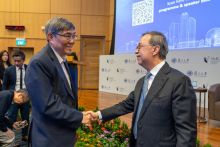
At the launch of BCA’s Green Mark Version 7 on 2 September 2026, National Development Minister Chee Hong Tat highlighted SMU as an example of how energy efficiency makes both environmental and economic sense.
That recognition underscores the wider relevance of the University’s investment. For building owners and organisations, sustainability decisions often involve balancing immediate expenditure against long-term benefits – SMU’s retrofit provides a practical example of how those considerations can be reconciled through improvements to existing infrastructure.
The project also highlights the broader role of universities in advancing sustainability, making them “walk the talk” in their physical structure, going beyond developing knowledge and preparing future leaders.
In this respect, the Administration Building serves as a working model. Its energy performance can be measured, its financial returns assessed, and its approach adapted by others facing similar decisions.
The SLE60 rating for the building marks an important milestone, but its lasting value lies in showing how a familiar workplace can become significantly more efficient without compromising its core purpose. As organisations consider how best to invest in a sustainable future, SMU’s experience offers a practical takeaway: meaningful environmental progress begins with the buildings people use every day.
See also:
- Green Mark framework adds energy efficiency certification, allowing buildings to be rated independently on energy performance | SMU Newsroom
- Energy-saving performance of alternative cooling systems to be included in green building assessment criteria | SMU Newsroom
- Inside SMU's Hybrid Cooling Retrofit for Energy Savings