Seeing differently: Hong Huazheng’s journey through art, sustainability and mentorship
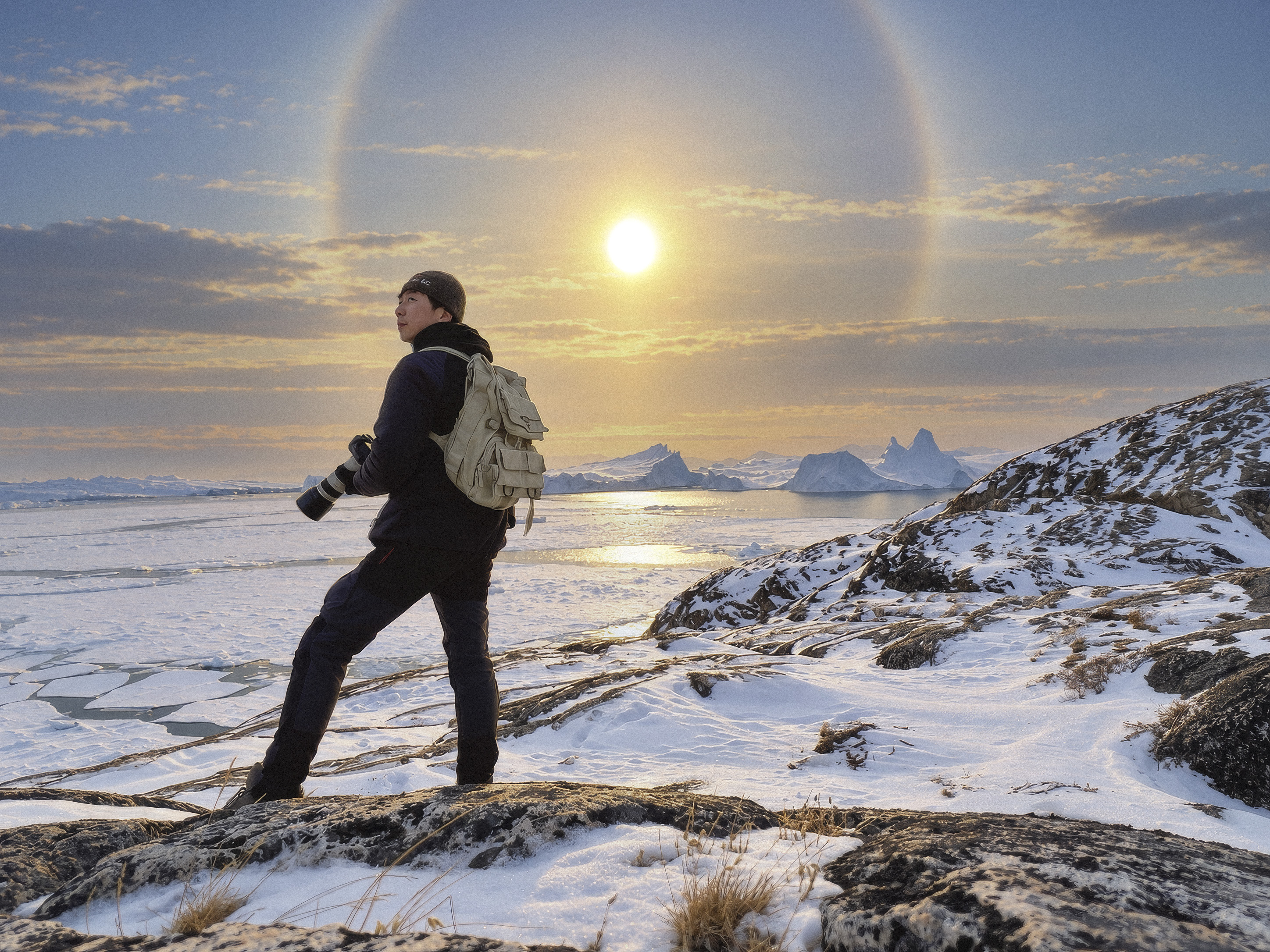
Hong Huazheng (BBM, 2010; MST, 2026) returned to SMU for the joy of learning. Now, through the SMU Emerging Artist Award, he is carrying forward the faith a professor placed in him 16 years ago.
Photography taught artist Hong Huazheng – who prefers to go by H – to look closely at a changing natural world. Losing most of the vision in his dominant eye forced him to learn how to look again.
Before finding his footing in photography, H was a business student at SMU. He later pursued a Master of Fine Arts and, most recently, a Master of Sustainability, bringing together three disciplines that now shape how he understands and depicts climate change.
“My life has taken a slightly strange academic route. I started with a business degree at SMU, then did a Master of Fine Arts, and most recently a Master of Sustainability, with much of my interest centred on climate change,” he shared.
“On paper, business, art and sustainability look like three different things. Somehow, they have ended up becoming the three lenses through which I look at the same world,” he added.
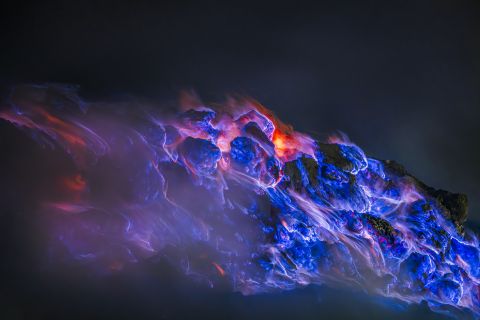
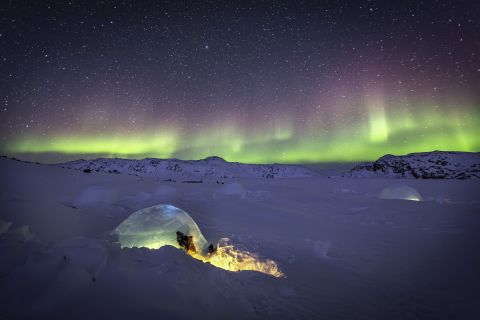
Through images ranging from methane bubbles trapped beneath ice to glaciers shrinking over time, H presents climate change not only as an environmental crisis, but as something people can encounter visually and emotionally.

H’s academic journey has shaped both his artistic practice and his professional life. His business experience gives him the financial and organisational foundation to pursue ambitious work without expecting an immediate commercial return.

“Art makes me stop and look. Sustainability makes me ask what I am actually looking at,” he shared. “And then there is business – which is the much less sexy but extremely necessary backbone of the whole thing!”
A new perspective
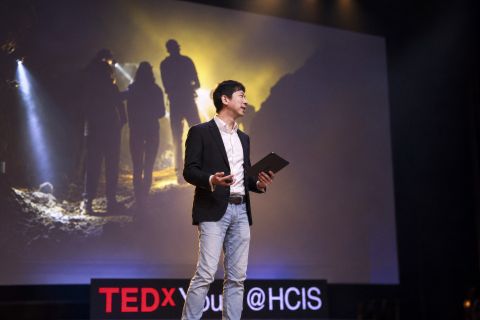
But as H’s work became increasingly concerned with how people see the natural world, his own relationship with sight changed dramatically. In early 2025, he experienced vision loss caused by a retinal detachment and further complications. Over the months that followed, he underwent four surgeries and numerous hospital visits, ultimately losing most of the vision in his dominant eye.
“For somebody whose work – and really whose way of experiencing the world – is so closely tied to sight, it was devastating,” he shared. “It wasn’t simply a medical problem. It became an existential one.”
Losing vision affected far more than his work as a photographer. H had to relearn everyday tasks, from reading and navigating stairs and kerbs to moving through unfamiliar environments.
“Things that used to happen automatically suddenly required thought,” H shared. “Psychologically, it affected me very badly as well. I went through a severe depression and recovery has not been linear.”
During his recovery, H’s perspective and practice began to change. He became less interested in perfection and more focused on what matters most to him: curiosity.
“I would certainly prefer to have my vision back. What changed was perspective,” he said.
The joy of learning
His return to SMU for a Master of Sustainability gave that curiosity a broader framework. “I simply missed learning for the sake of learning. It enlarges you as a person,” he said. He graduated with a GPA above 4.0, but the grades were almost incidental. What mattered was rediscovering the pleasure of being genuinely curious.
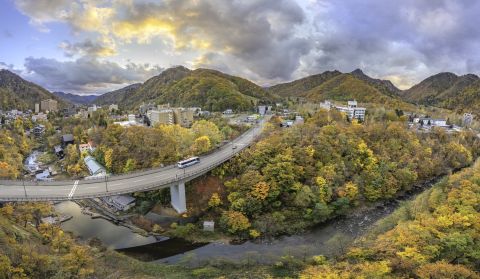
After years spent photographing landscapes, H began to notice environmental change in physical, visible ways. Returning to the same places, he saw glaciers retreat and snow patterns shift.
“At some point, photographing those changes was no longer enough for me,” he said. “I wanted to understand why.”
The MST gave H a broader framework for the questions emerging from his photography. He began to consider climate change not only as an environmental issue, but also as an economic, political, technological, social and justice challenge.
“Systems Thinking in particular gave me a language for something I had intuitively felt for years: everything is in conversation with everything else,” H said. That framework now helps him connect what is visible in a landscape with the economic, political and social systems shaping it – and to create work that invites viewers to ask better questions rather than settle for easy answers.
One small vote of confidence
H’s time at SMU also shaped his understanding of what education can make possible. Through the SMU Emerging Artist Award, he hopes to extend to young artists the belief once shown to him by his late mentor, Professor Winston Koh.
What H remembers most is Professor Koh’s willingness to invest in a student beyond what the role required – through his time, attention and honesty.
“What stays with me is not one spectacular piece of advice,” shared H. “It is the fact that he gave me more than he needed to.”
That generosity shaped H’s understanding of education: sometimes, a student needs someone to recognise their potential before there is any obvious reward for doing so.
Through the SMU Emerging Artist Award, H hopes to give SMU students pursuing creative careers an early vote of confidence – the encouragement to keep developing work they feel compelled to make.
“The Emerging Artist Award was never intended simply to identify the most polished artist. What interests me is the person with something inside them that they genuinely need to express,” said H. “And then, every now and then, you see just how far that little seed can travel.”
In 2016, the award went to Jasmine Wong, now known as musician Jasmine Sokko, who has since performed at the National Day Parade. Her career and success are entirely her own, but for H, her journey is a reminder of how far an early vote of confidence can travel.
This year, H and fellow alumni and photographers Ang Tuan Kiat and Lee Jin Yang set out to endow the Emerging Artist Award so that it would have permanent funding. For H, it is a way to extend Professor Koh’s generosity to students they may never meet.
“From Winston, the qualities I hope to carry forward are generosity, patience and the willingness to believe in somebody before there is any obvious reward for doing so,” said H. “He gave me more than he needed to, and I haven’t forgotten that.”

A lasting commitment
That effort has since paid off. The SMU Emerging Artist Award has been successfully endowed, with the full $50,000 needed now raised – ensuring the award can continue in perpetuity.
“This feels like a huge milestone – and a lasting commitment by alumni to the arts at our alma mater,” said H.