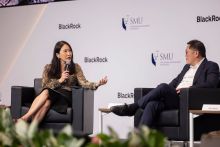


Bridging perspectives to shape AI for human flourishing
AI can automate tasks, augment expertise and accelerate discovery. But the more consequential question is not simply what the technology can do. It is what we should use it to do—and how it can help people live, work and age well.
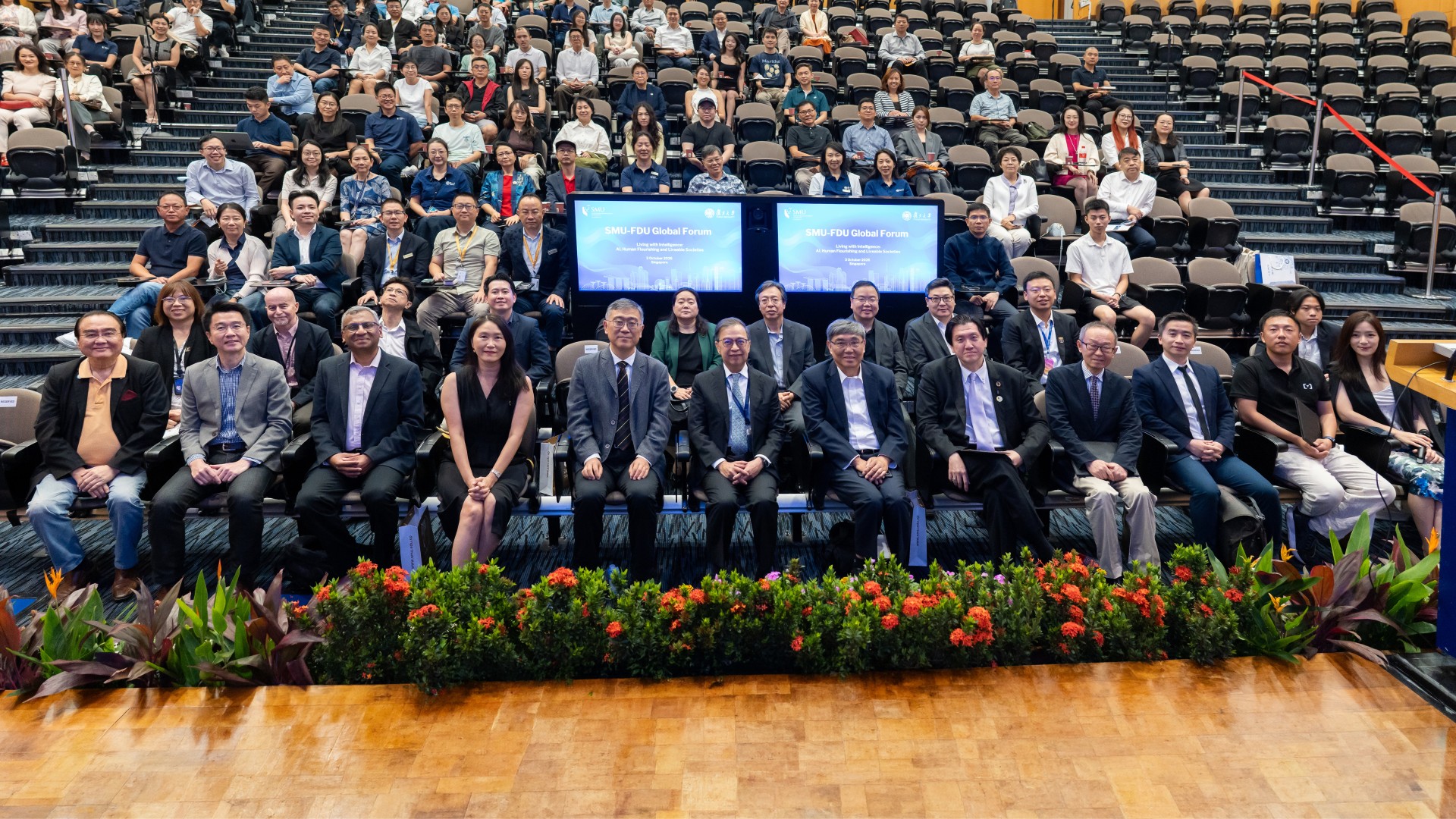
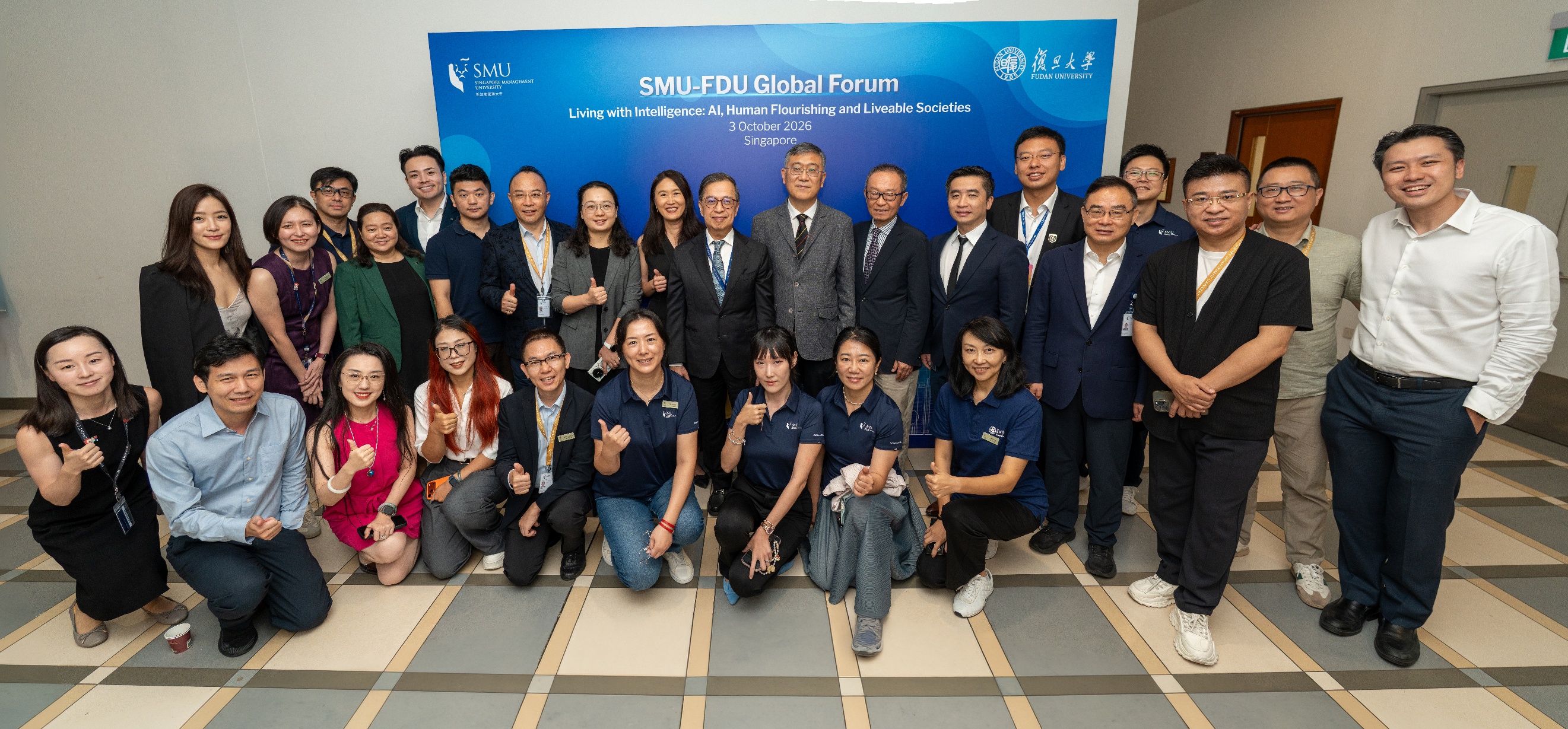
That challenge framed the SMU-Fudan Global Forum at SMU. Bringing together perspectives from academia and industry, and bridging Asian and Western university communities, the Forum explored how intelligent technologies could strengthen human agency across work, food production, longevity and human–machine interaction—and contribute to societies that are more liveable, inclusive and sustainable.
The Forum is organised under the auspices of the SMU-Fudan University strategic partnership with multifaceted and interdisciplinary collaborations in the areas of digital transformation and sustainable living to address challenges and contribute to society.
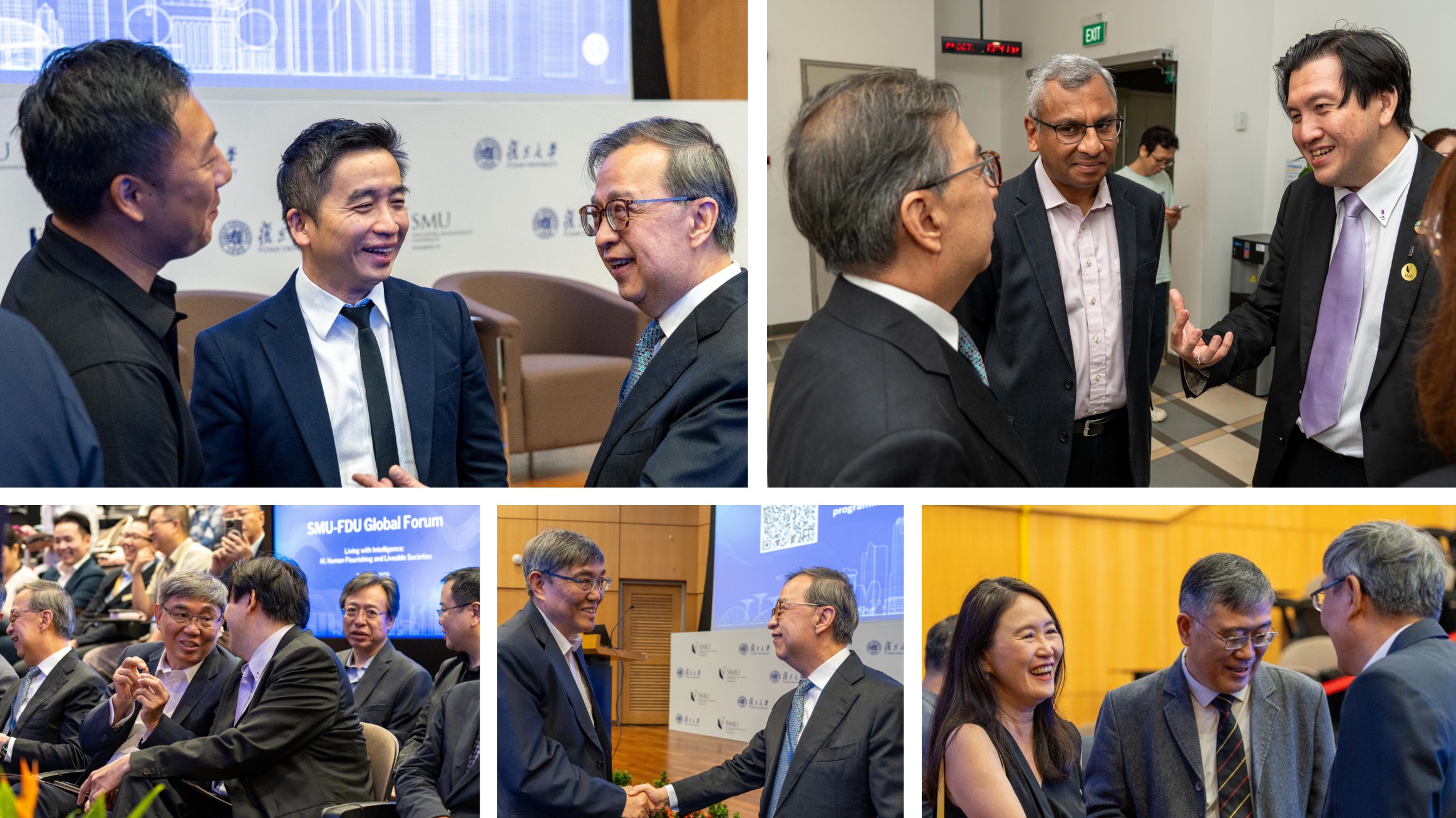
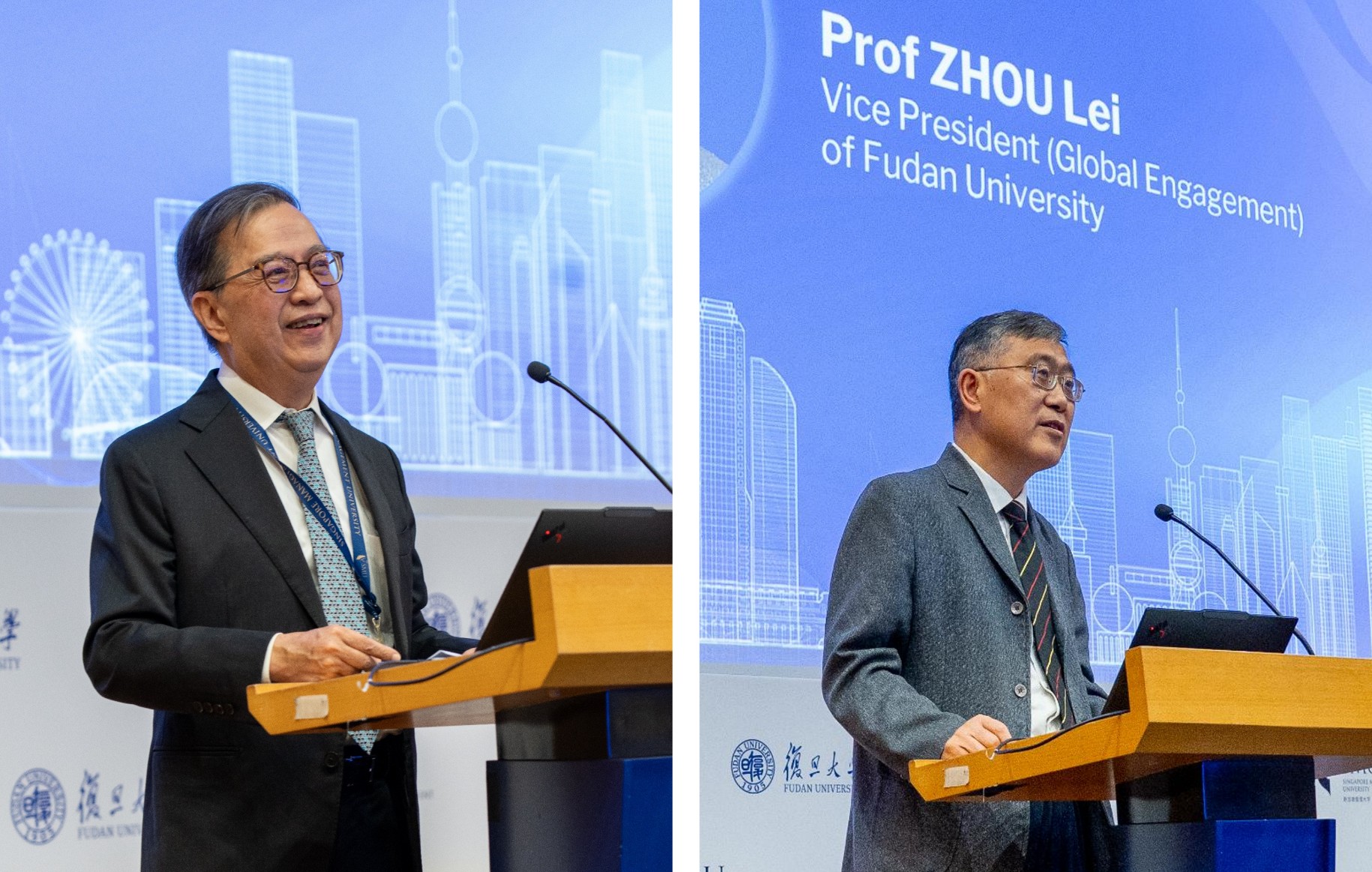
Opening the Forum, SMU Provost Professor Alan Chan said AI’s rapid development is changing how people work, learn and live. Its builders and users, he argued, must be guided by a strong moral compass and a sense of social responsibility. The importance of this focus was underscored by Fudan Vice President Professor Zhou Lei who noted that “AI is profoundly reshaping economic development, social governance and people’s way of life worldwide.”
The central question is “not what AI can do, but what we use AI to do for the benefit of society and humanity”, he said.
Turning experience into shared intelligence
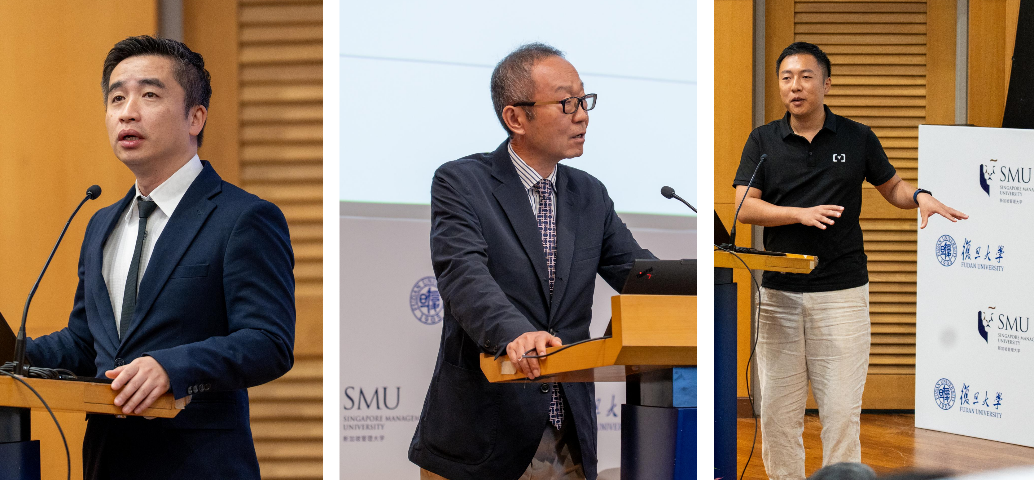
For Professor Zhu Feida, Director of SMU-Fudan DBA(Tech) Program at SMU, AI creates new possibilities for preserving hard-won expertise. In his keynote, he introduced “Grace”, a fictional trade-finance employee with 30 years of experience, and asked what might happen if her accumulated judgment could continue serving an organisation after her retirement.
AI could make experience “reusable” by absorbing individual knowledge into organisational intelligence. Yet this raises difficult questions: Who owns that knowledge? Who may use it? And who should benefit from the value it creates?
There is also a challenge for younger workers. If AI takes on the routine tasks through which people traditionally develop expertise, how will they build judgment of their own? Professor Zhu argued that AI should be a study companion rather than an answer key: a tool that helps people test ideas while preserving the “seed” of independent thought. “Using AI should make us intellectually fitter,” he said.
Rethinking how and where we grow food
For Qin Chuhan, founder and CEO of Mary Agrotechnologies (Mary Ag), food sovereignty begins with a practical concern: whether people can reliably access safe, nutritious food wherever they live.
Mary Ag uses vertical farming in environments ranging from high-altitude Tibet to tropical Thailand. AI analyses data on light, temperature, nutrients and other conditions, helping growers understand how plants respond and test growing environments that would be difficult to replicate on conventional farms.
Qin described universities and research institutions as the “backbone” of startups such as Mary Ag, supplying knowledge that companies can translate into practical technology. Mary Ag also shares knowledge with other vertical-farming companies, even as it balances public benefit with the commercial need to remain viable and keep innovating.
From ageing to longevity
Professor Peng Xizhe, Director of the Fudan Institute on Ageing, placed AI within a broader shift from thinking about ageing as dependency to thinking about longevity as continued participation.
Older people, he argued, can remain active in economic and social life through paid work, caregiving, knowledge-sharing and other forms of contribution. AI could support this by helping people manage their health, enabling providers to allocate scarce resources more effectively, and making lifelong learning easier to access.
“In that way, elderly people can live better and live with more dignity,” he said.
But technology must understand the people it serves. Professor Peng noted that large language models have historically drawn heavily on Western, English-language sources. A robot supporting an older person in China, for example, must understand not only the language but also the cultural expectations surrounding care. Governments, universities, scientists and engineers therefore have a responsibility to shape “AI for good” deliberately.
Knowing when to help
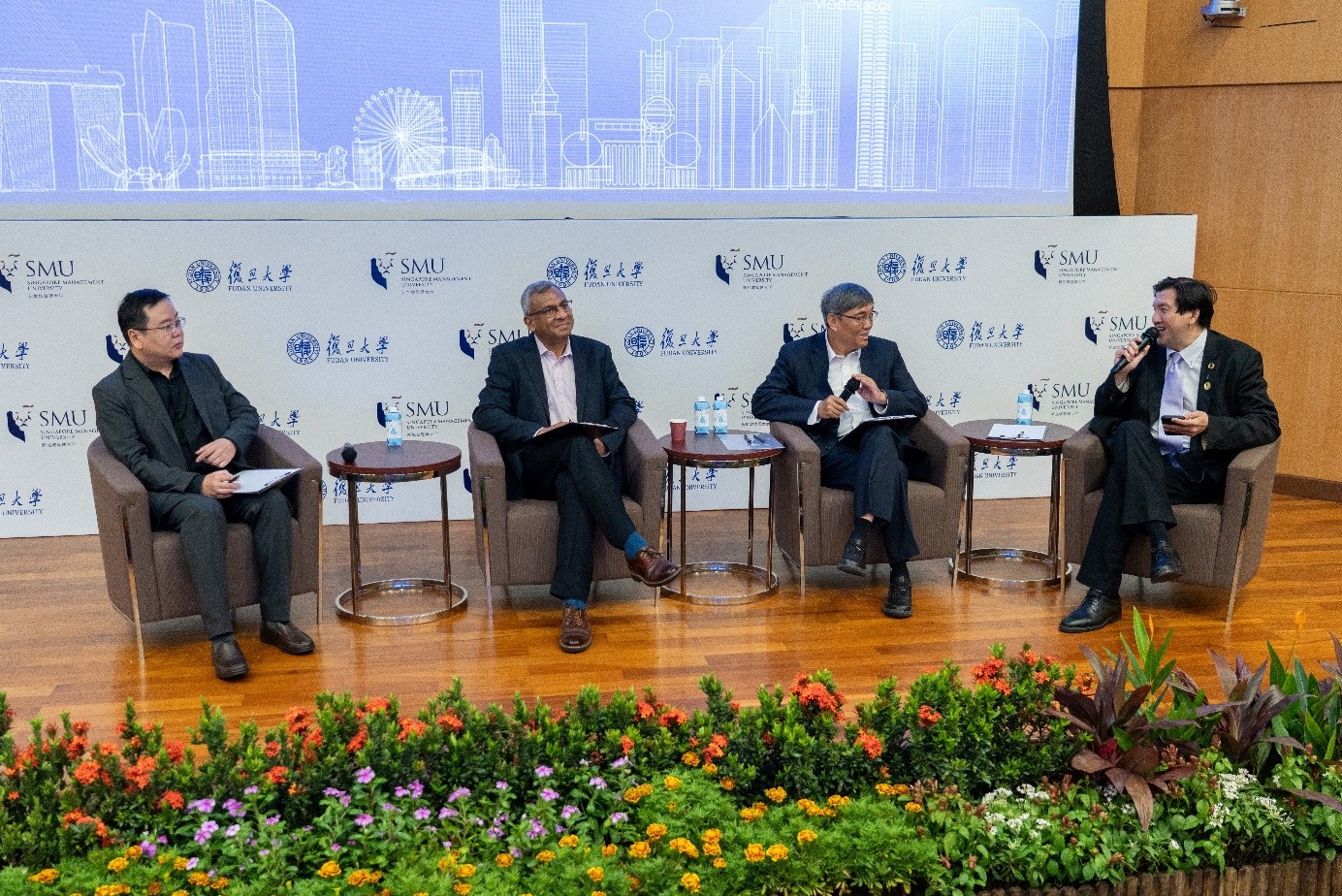
For Professor Subramanian Ramamoorthy, Director of the Centre for AI in Assistive Autonomy at the University of Edinburgh, one test of dependable AI is deceptively simple: can it recognise when someone actually wants help?
Human collaboration depends on judgments about intention, context and behaviour. Robots may model qualities such as empathy and fairness, but they do not possess them. This distinction matters especially in eldercare, where technology should be introduced carefully and without diminishing human contact.
Professor Ramamoorthy cautioned against expecting older people who encounter digital technology late in life simply to adapt to machines designed without them in mind. Nor should an intelligent assistant intervene merely because it can. He described the ideal relationship this way: “When I’m not able to do it, you do it. When it’s clear I’m able to do it, leave me alone.”
The same principle applies beyond ageing. Robots may usefully replace people in dangerous or physically demanding environments, but Professor Ramamoorthy was more wary of automating activities from which people derive meaning. Even an automated birthday message misses the point if it removes the moment of human connection it was meant to create.
The human question in AI
Across these different fields, the speakers returned to a common concern: how can technological progress be shaped around human needs? More specifically, what should AI enable people to retain or gain?
For Professor Zhu, it should strengthen thought and expertise. For Qin, it should improve access to essential resources while remaining viable enough to last. Professor Peng sees it supporting longer lives of learning and contribution. Professor Ramamoorthy asks whether intelligent systems can assist without displacing the choices, activities and relationships that give life meaning.
As AI expands what individuals and societies can do, the harder task is deciding which capabilities improve our lives—and which risk removing something worth keeping.
Human flourishing is not an outcome we can delegate to AI. It is the measure by which we should decide how to use it.
See also:
Living with intelligence: SMU and Fudan chart the way for AI and human flourishing | SMU Newsroom