

New SMU institute to advance knowledge on ageing in Singapore’s next economic chapter
Singapore is already considered a super-aged society today, and by 2030, one in four citizens will be aged 65 and above. Across Asia, governments and businesses are already confronting the implications: tighter labour markets, rising healthcare demands, changing retirement patterns and growing pressure on caregiving systems.
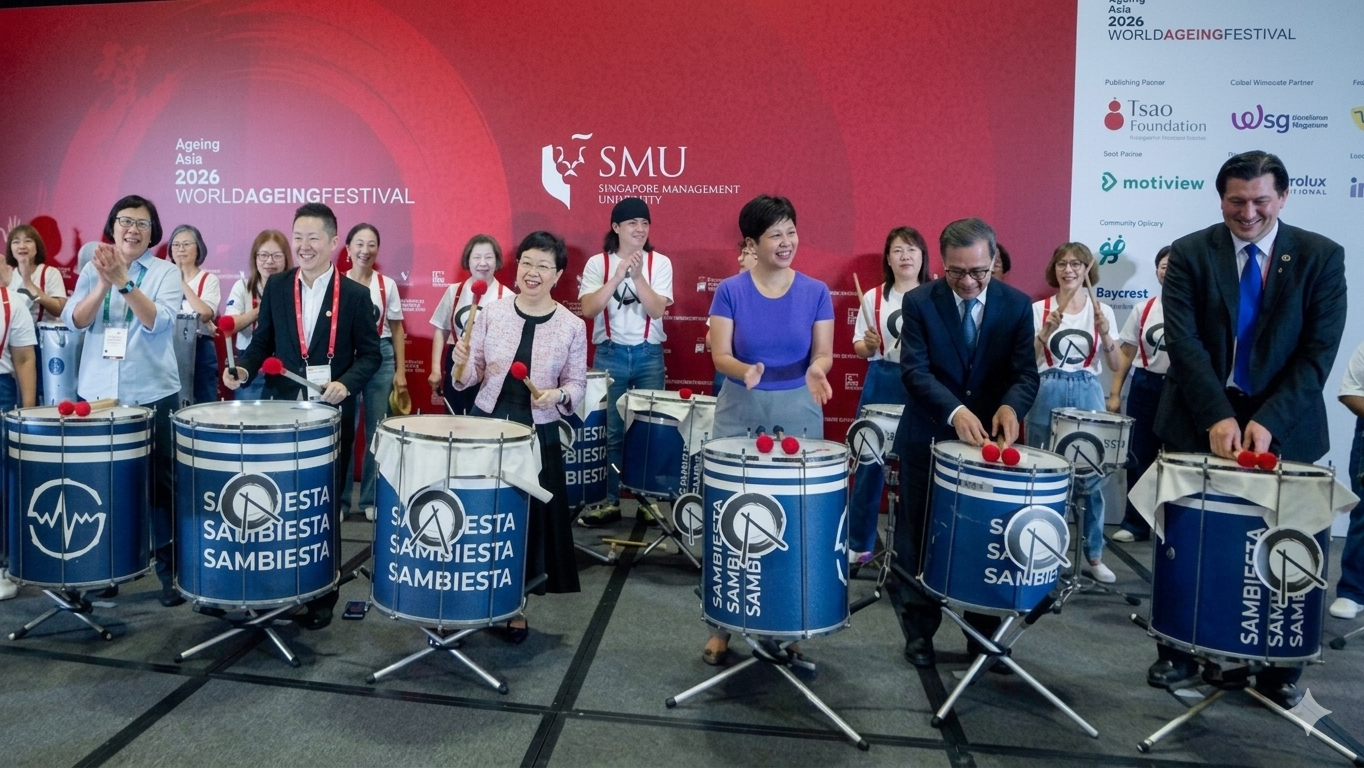
On 14 April 2026, SMU launched the Longevity Societies and Economies Institute (LSEI), which will focus on the economic and societal transitions needed for our nation to continue thriving despite this ageing population.
The launch took place at the World Ageing Festival 2026, where SMU served as co-host and Academic Pillar Partner. The Institute was officially launched by Ms Indranee Rajah, Minister in the Prime Minister’s Office, Second Minister for Finance and Second Minister for National Development.
LSEI is founded on the premise that these developments cannot be treated as isolated policy concerns. They require coordinated changes across employment, finance, healthcare, technology, urban planning, and community life.
Moving beyond traditional ideas of retirement
The Institute builds on research foundations already established at SMU, including the Centre for Research on Successful Ageing (ROSA) and the Singapore Life Panel®, a long-running national panel-survey, tracking financial and well-being outcomes among older adults.
By consolidating existing initiatives into a coordinated, university-level platform, the Institute will also focus on translating deep research into actionable insights for government agencies, employers, financial institutions, and community organisations.
Backed by a multi-year university commitment exceeding S$10 million, the Institute will bring together expertise from economics, business, law, social sciences, accountancy, and computing to study how institutions and systems must evolve alongside longer lifespans.
In her remarks at the launch, Professor Lily Kong, President of SMU, argued that many public and workplace systems still reflect assumptions from an earlier era, and that “a three-stage life – learn, earn, retire” no longer describes how most people actually live.
“We have built systems that still treat later life primarily as a phase of care and cost; escalators move a little too fast; digital forms that assume one has an employer; font sizes no one quite asked for; and retirement policies written when 65 was considered a long life indeed,” she said.
“Taken together, they communicate something: the designed world could afford to catch up with the lived world,” Professor Kong said. “Many of us still adjust to the news that we are living to 90 – and indeed 100 – intending to remain very curious, productive, and engaged for much of it. This is the gap that the LSEI that we are establishing today will help to close.”
Seeing growth opportunities in a silver economy
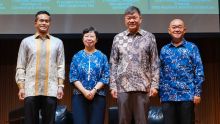
The Institute’s Interim Co-Directors are Cheong Wei Yang, SMU Vice Provost (Strategic Research Partnerships), and Paulin Straughan, Professor of Sociology (Practice) and Director of ROSA.
Before joining SMU, Dr Cheong served as Deputy Secretary for Technology at Singapore’s Ministry of Health and continues to serve concurrently as Senior Advisor for Health Economics.
He said the Institute was established with a deliberate emphasis on economic adaptation, not simply eldercare.
“However, it also presents significant growth opportunities via the silver economy,” Dr Cheong said of population ageing.
“We should not see ageing as only a cost, such as healthcare, but instead as an economic and social opportunity if we approach it as an integrated systems redesign.”
That perspective reflects a broader shift now taking place internationally. As countries confront shrinking workforces and longer retirements, ageing is increasingly being discussed not solely through the lens of dependency, but through productivity, participation, and market transformation.
LSEI intends to examine questions that cut across sectors: how workplaces retain experienced workers; how retirement systems remain sustainable; how technology supports independent living; and how businesses adapt products and services for older consumers.
The Institute’s work will be organised around two research pillars: Building Longevity Economies and Cultivating Holistic Well-being.
The first focuses on labour markets, retirement systems, and the expanding silver economy. The second adopts a life-course approach, studying preventive health, financial readiness, social participation, and mental resilience across different stages of ageing.
Supporting both pillars will be research into legal frameworks, behavioural change, assistive technologies, and digital adoption.
The social consequences of leaving work
Among the Institute’s early research priorities is a question often discussed in economic terms but experienced personally: what happens when work ends?
Recent research led by Professor Straughan and her team examined how retirement affects social connectivity among older adults in Singapore. Drawing on data from more than 10,000 individuals aged between 50 and 80, the study found that retirement reshapes identity and social participation in uneven ways.
Retirees generally reported increased social activity after leaving the workforce. Yet retired men, in particular, experienced sharper declines in their sense of meaning and contribution compared with retired women.
Professor Straughan described retirement as a “pivotal life course transition” that can unsettle one’s sense of identity, particularly in Singapore, where professional identity is often closely tied to personal worth and routine.
“While retirees report increased participation in activity and gendered expansions in different aspects of their social networks, they also experience a decline in perceived social contribution,” she said.
The findings point towards a quieter challenge within ageing societies. Financial security alone may not determine quality of life in later years; purpose, belonging and relevance matter as well.
Linking research with policy and industry
Alongside the Institute’s launch, LSEI announced partnerships with five organisations spanning government agencies, community care, and the private sector: Agency for Integrated Care, Lions Befrienders, Singlife, St Luke's ElderCare and Workforce Singapore.
The collaborations are intended to move research beyond academic publication and into operational practice and policymaking.
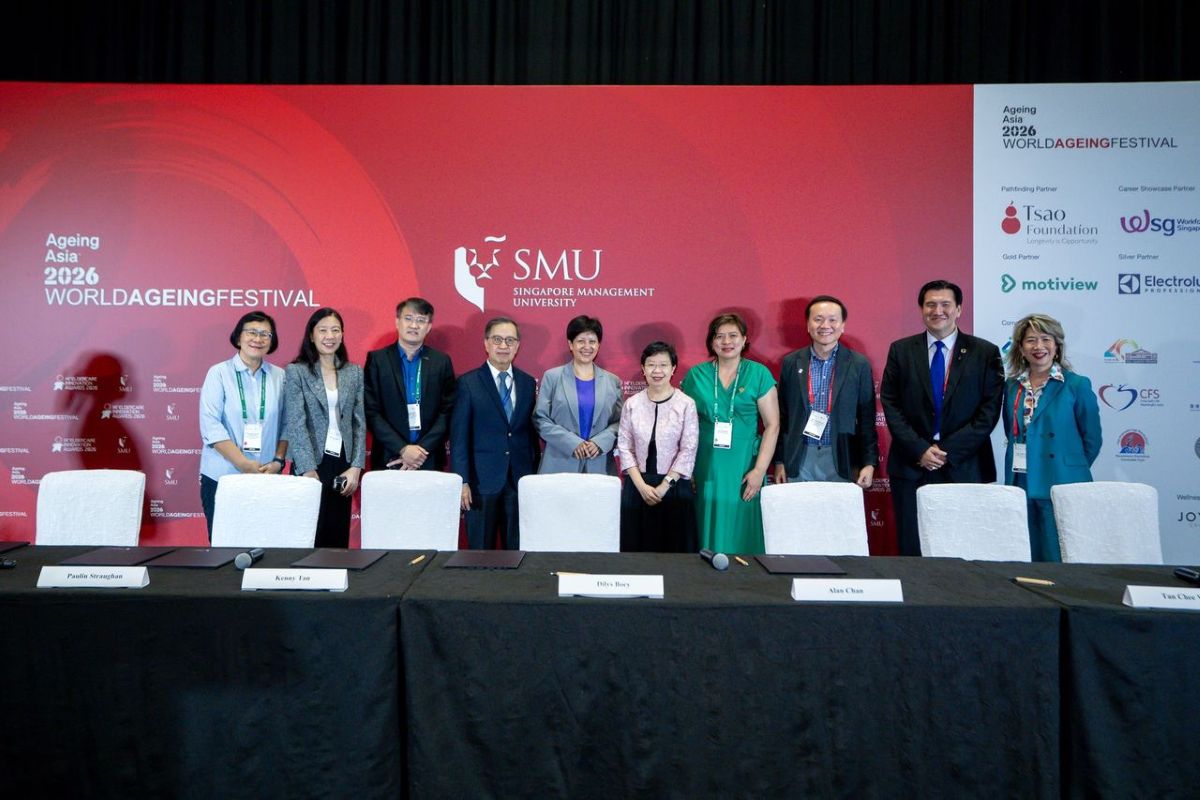
For Workforce Singapore, the partnership will focus on career longevity, mature workers, and workplace redesign. For Singlife, the emphasis will be retirement readiness and financial resilience. Community organisations, including Lions Befrienders and St Luke’s ElderCare, will contribute frontline perspectives on eldercare, social connection, and community support systems.
With these research partnerships, LSEI will align academic research with policy development and operational practice, strengthening the feedback loop between evidence, implementation, and social and economic institutional design.