

SMU Indonesia to boost workforce in AI-driven economy
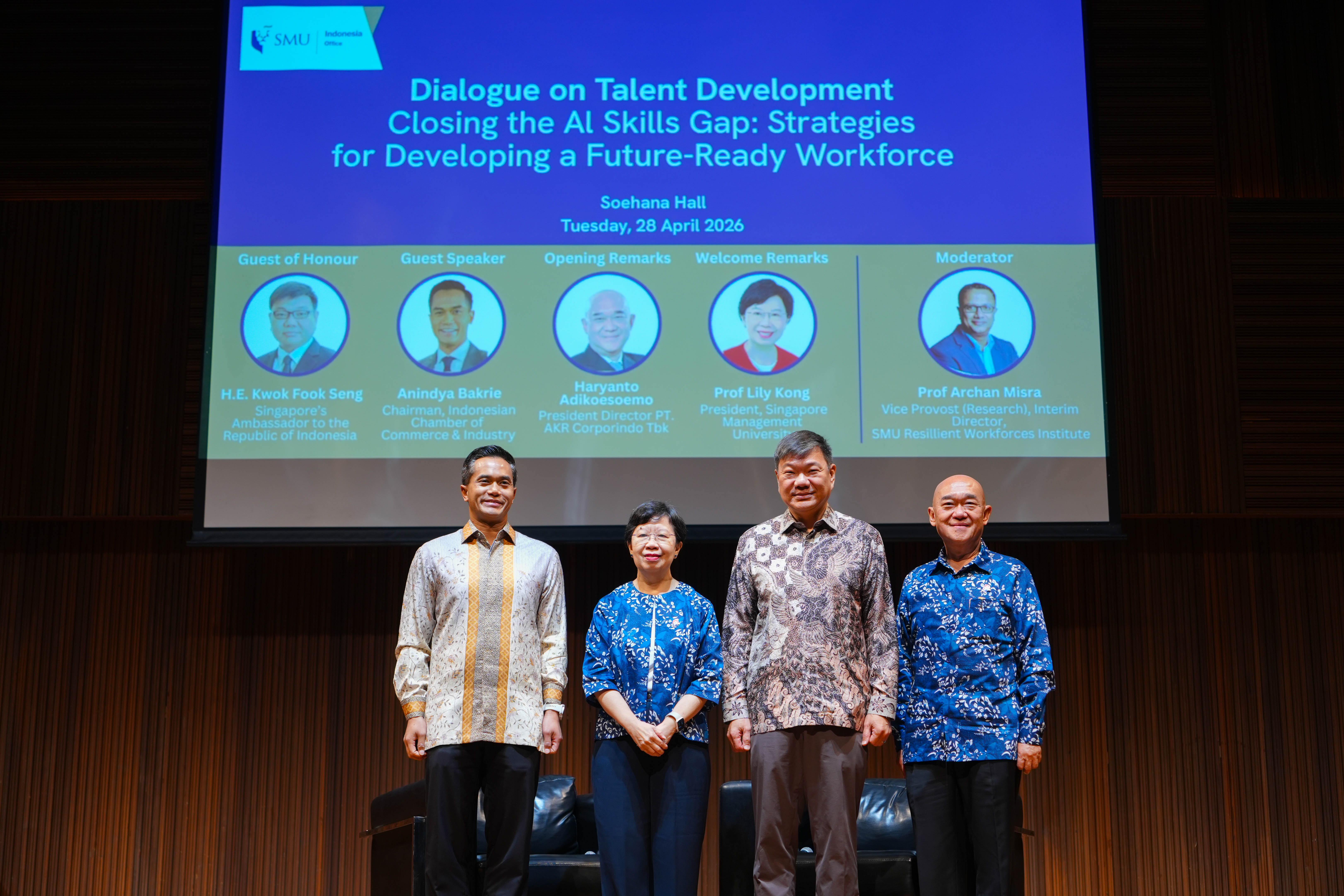
As Indonesia pushes ahead with digitalisation and AI adoption, SMU is expanding its presence in the country with a new subsidiary aimed at strengthening workforce readiness and employability.
The launch of SMU Indonesia marks a significant step in the University’s long-term engagement with Southeast Asia’s largest economy.
It will work with Indonesian partners to develop executive education and skills programmes for sectors undergoing rapid change, including banking and finance, mining, energy, telecommunications, infrastructure, logistics, and transportation.
The move comes as Indonesia’s government agencies, employers, and universities face mounting pressure to prepare its workforce for an economy increasingly shaped by technology.
Indonesia’s Ministry of Manpower has identified “triple readiness” — technical, digital, and human skills developed together — as a national priority by 2030. Recent data from Statistics Indonesia (BPS) highlights the scale of the challenge: one-third of young workers are employed in jobs that do not match their educational qualifications, while youth unemployment remains more than twice the national average. Each year, around 3.5 million graduates enter the workforce.
SMU Indonesia has been established with those pressures in mind, focusing on programmes intended to better connect education outcomes with industry demand across Indonesia and Singapore.
Professor Lily Kong, President of SMU, said the University sees a broader role for higher education institutions as economies adapt to technological change.
“Indonesia stands at a defining moment in its development, where the strength of its human capital will determine the trajectory of its economic transformation. At SMU, we believe universities must evolve beyond their traditional roles to become active partners in shaping workforce outcomes.
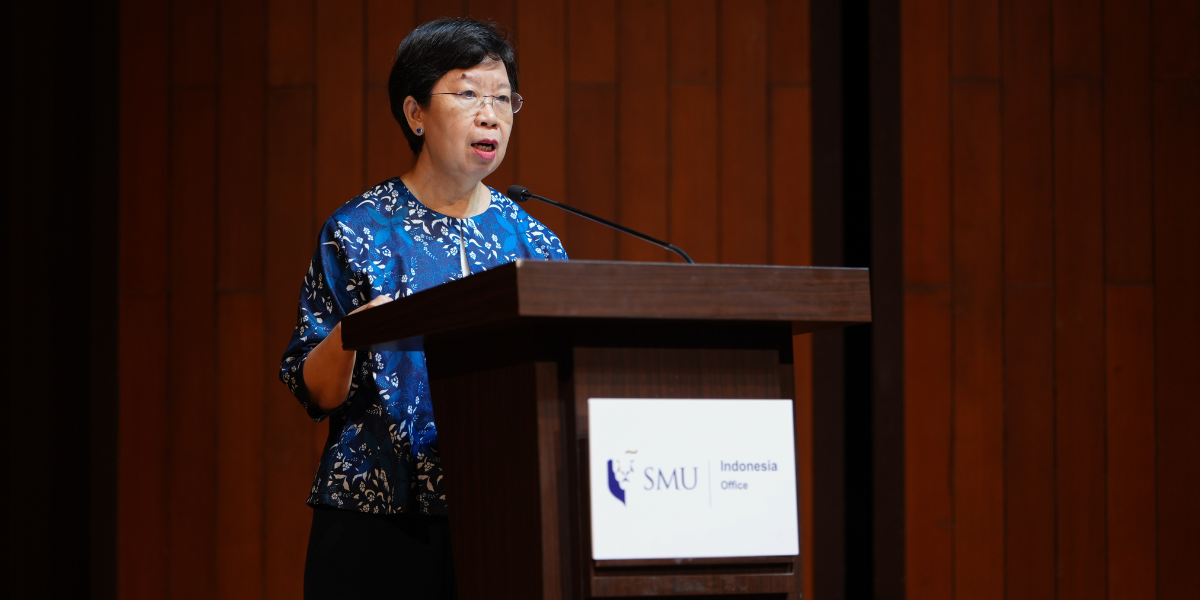
“The establishment of SMU Indonesia as a subsidiary reflects our deep and long-term commitment to this vision. We hope to contribute meaningfully to Indonesia’s ‘triple readiness’ agenda, supporting the development of a workforce across Indonesia that is technically proficient, digitally fluent, and grounded in the human capabilities that will remain indispensable in an AI-driven world.”
Expanding beyond traditional academia
The subsidiary also formalises and expands SMU’s existing partnerships in Indonesia. These include collaborations with Indonesia’s Ministries of Education and Manpower, Bank Indonesia, Universitas Indonesia, Universitas Gadjah Mada, and Bandung Institute of Technology.
SMU Indonesia is also moving to support executive education, applied research and industry-led curriculum development. Several initiatives are already underway.
Through SMU’s Resilience and Workforce Transformation (ResWORK) initiative (see Home | Resilient Workforces Institute), programmes are examining how AI is reshaping youth employment and changing the skills required across industries. In Jakarta, collaborations with Jakarta Smart City focus on digital urban solutions and sustainable city planning.
The university is also working with companies in banking, energy, and natural resources to design programmes linked more closely to changing job roles and leadership needs. Exchange and experiential learning initiatives, including the Global Ready Talent initiative and the Global Summer Programme, will continue to support cross-border exposure for students and graduates in Indonesia and Singapore.
Haryanto Adikoesoemo, President Director of AKR and Chair of the SMU International Advisory Council Indonesia, said: “Indonesia faces a skill gap in areas such as data science, AI, cybersecurity, and cloud computing, which makes it difficult to meet the demand driven by high-growth companies in the digital economy. I hope that the reinvigorated SMU Indonesia can work even more closely with Indonesian academia and the private and public sectors to address our talent challenges and build an even stronger future economy.”
The launch of SMU Indonesia reflects a broader shift taking place across higher education. Universities are increasingly expected to demonstrate not only academic quality, but also their ability to respond to labour-market needs and technological change.
SMU Indonesia aims to strengthen SMU’s role in a regional conversation that is becoming more urgent: how education systems, employers and governments can work together to prepare workers for jobs that continue to change faster than traditional pathways can accommodate.