


Lifelong learning, partnerships, impact: SMU’s future-ready agenda at APAIE 2026
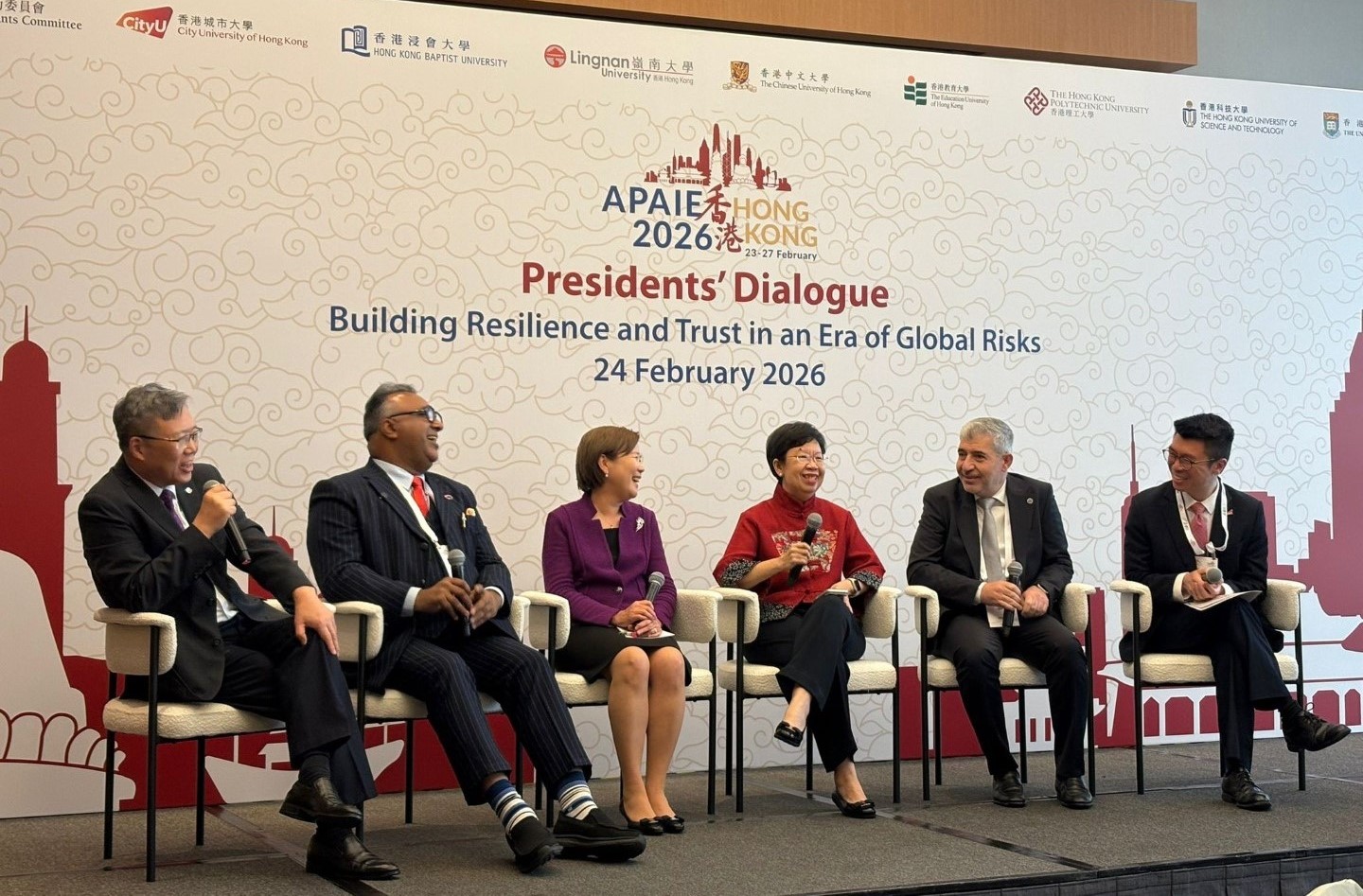
With populations in many cities ageing, and technologies like AI transforming the scope of work, it is imperative that universities evolve to remain relevant and affective. This was one of the key conversations at the recent Asia-Pacific Association for International Education (APAIE) 2026 Conference, held in Hong Kong on 26 February 2026.
Speaking at the conference’s Presidents’ Dialogue at the conference, SMU President Lily Kong laid out SMU’s approach to strengthening resilience, trust and international collaboration in higher education.
In her sharing, she focused on partnerships across sectors, lifelong learning, and research that addresses real societal needs, all of which are priorities that underpin the University’s strategic vision towards 2030.
Strengthening collaboration across sectors and borders
The Presidents’ Dialogue brought together university leaders from across the Asia-Pacific to discuss how institutions can build resilience and maintain trust amid growing global uncertainty.
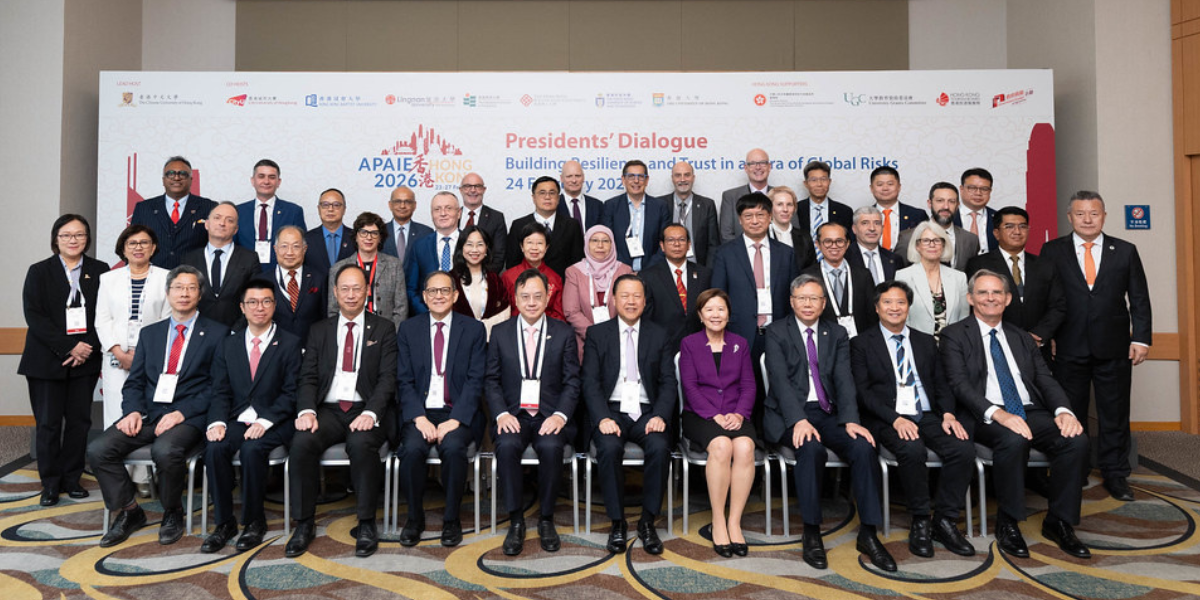
Moderated by Jin-Guang Teng, President of The Hong Kong Polytechnic University, the discussion examined the implications of geopolitical shifts, technological change and demographic trends for higher education.
Prof Kong noted that these developments are reshaping the expectations of the role of universities, reinforcing the need for collaboration across sectors and borders. Participants agreed that effective partnerships must increasingly span academia, industry, government and community organisations.
Preparing learners for longer working lives
A key focus of Prof Kong’s remarks was how universities should respond to demographic change and technological disruption.
She observed that demographic shifts are reshaping society and that universities must adapt if they are to remain relevant. Professor Kong added that institutions must move beyond preparing students for a single career pathway and instead support learning across a lifetime.
“We should also educate for a 100-year life—where society lives and works for longer—by curating lifelong learning that is holistic and human in the face of the technological juggernaut.”
At SMU, this approach informs SMU2030, the University’s long-term strategy to strengthen human capital development through interdisciplinary learning, closer engagement with industry and expanded global opportunities for students.
Expanding research, regional engagement
Prof Kong also addressed the role of research in tackling complex societal challenges.
“Our research must rise above conventional metrics of prestige and university performance to deliver robust solutions that can truly benefit society.”
She added that universities must maintain openness while strengthening governance through partnerships that “transcend sectors, disciplines and borders”.
These priorities are also reflected in SMU’s growing regional presence, she noted; the University seeks to generate economic and social value across Asia through partnerships and regional platforms. This includes the upcoming SMU centre in Shenzhen, alongside existing initiatives in Jakarta, Bangkok and Ho Chi Minh City.
These initiatives deepen collaboration with academic, industry and government partners while creating more opportunities for students and faculty to engage with developments across the region.
Building global higher education ties
During APAIE 2026, SMU also hosted a senior leaders’ dinner reception attended by more than 50 university leaders from 19 countries.
At the gathering, SMU Provost Alan Chan shared the University’s strategic priorities towards 2030 and outlined areas for deeper international collaboration in education and research.
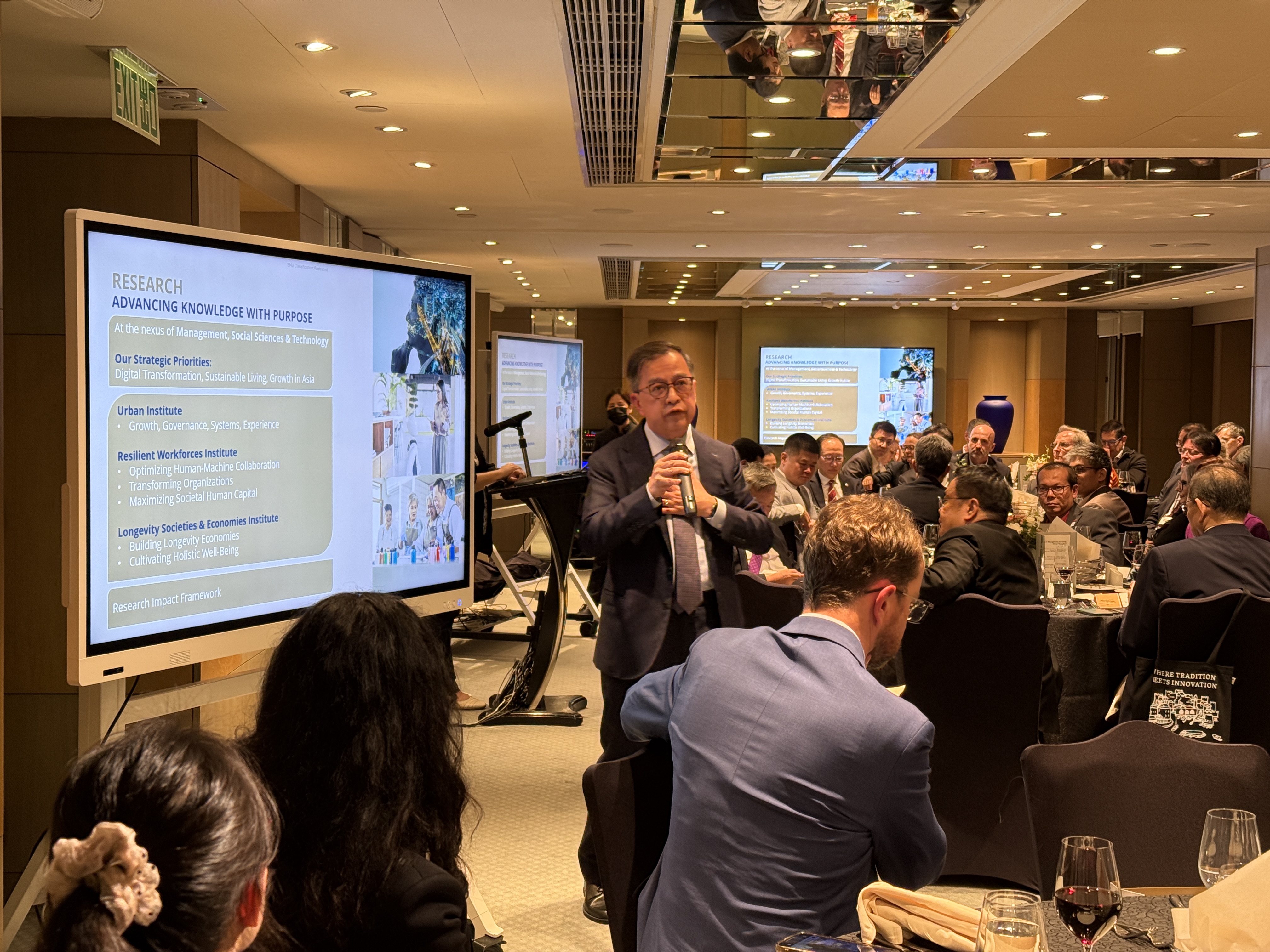
The reception enabled participants to exchange views on developments in higher education and discuss potential partnerships.
Hosted by The Chinese University of Hong Kong, APAIE 2026 attracted more than 3,300 higher education leaders, policymakers and industry representatives, and highlighted the continued importance of international engagement in higher education.
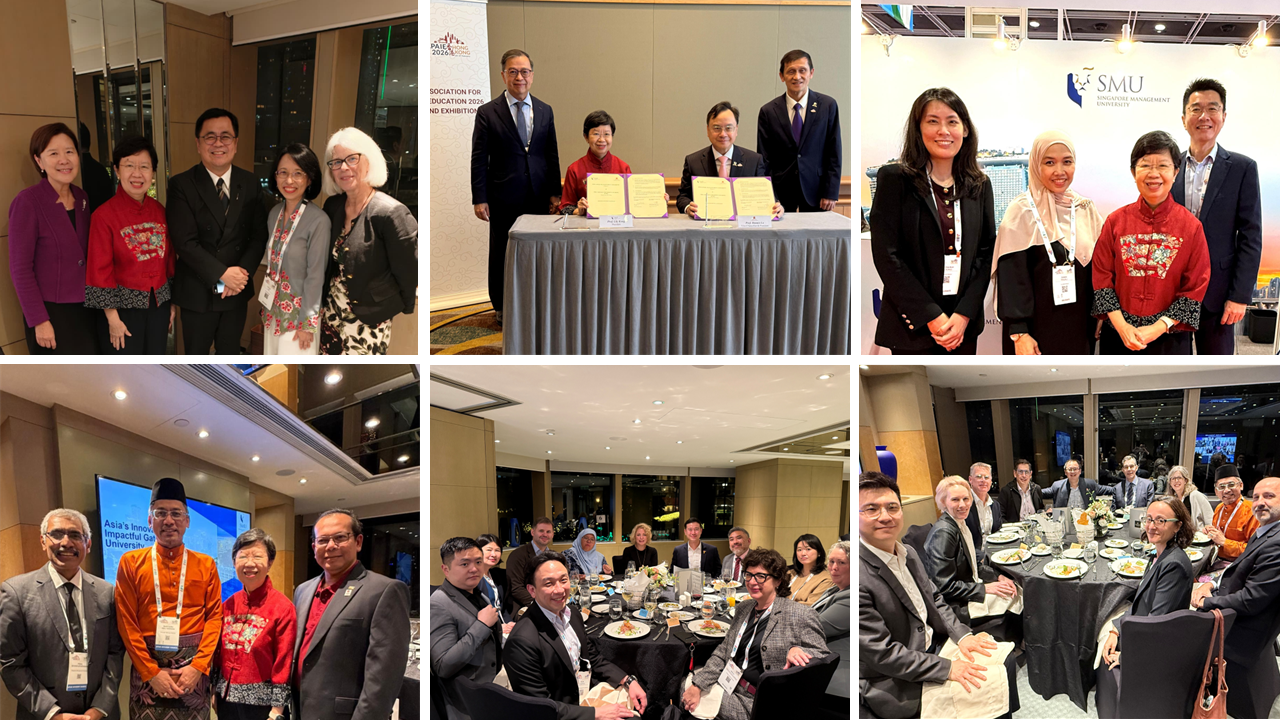
For SMU, the conference reinforced the importance of trusted partnerships in advancing the goals of SMU2030 across education, research and societal impact, as it contributes to conversations shaping the future of higher education.
See also: SMU Shares Blueprint to Reinvent Universities for Relevance and Impact at APAIE 2026 | SMU Newsroom