

Eileen Gu on ambition, belonging, and the freedom to choose
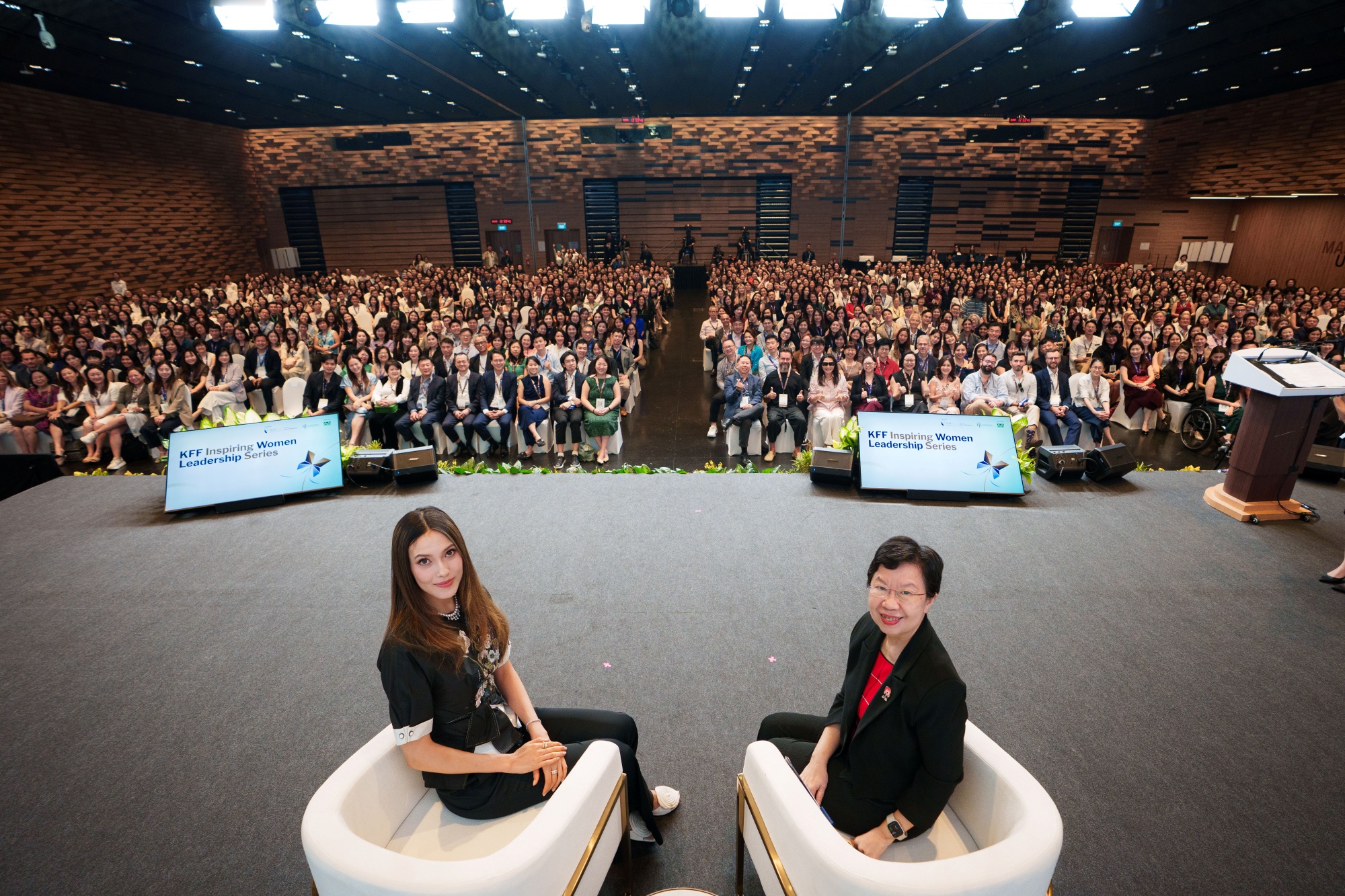
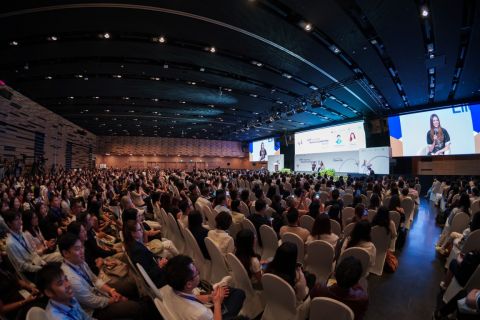
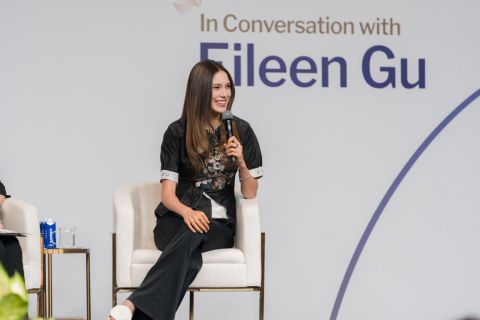
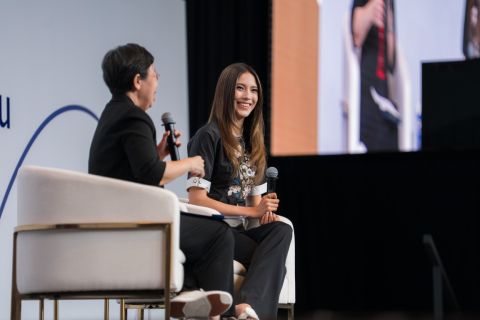
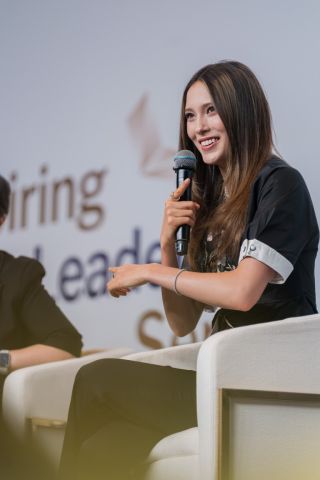
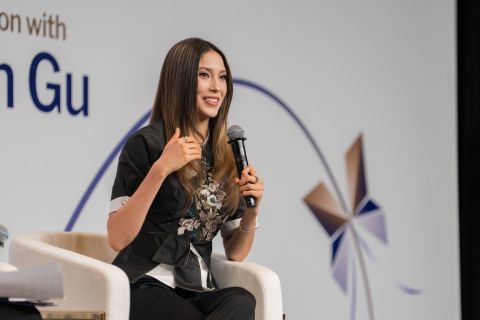
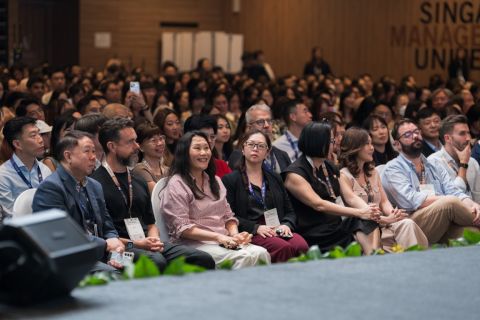
Olympic champion Eileen Gu gave an audience of 1,024 at SMU a candid look beyond her medal success, sharing how childhood friendships, competition and her mother’s guidance helped her build confidence, find belonging and make her own choices.
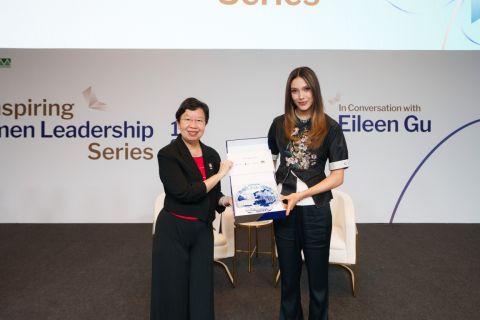
Speaking with SMU President Professor Lily Kong at the second Karim Family Foundation (KFF) Inspiring Women Leadership Series on 12 October 2026, Ms Gu reflected on the experiences that shaped her approach to ambition, uncertainty, and personal growth. Organised by KFF and SMU with the support of Musim Mas Foundation, the dialogue explored how supportive relationships and healthy competition can help people realise their potential.
In her welcome address, Professor Kong connected Ms Gu’s experiences with the purpose of university education: enabling students to discover their abilities, examine their values and consider who they hope to become. “A university at its heart, is a place where we explore questions about human potential and, indeed, seek to develop that human potential,” she said.
Finding confidence amid the unfamiliar
Every new skiing trick asks Ms Gu to attempt something she has never done before. Beyond the physical challenge of executing the movement is the mental work of overcoming hesitation, managing the possibility of failure and trying again. She has learnt to examine her own responses closely: what makes her afraid, how she handles pressure and which doubts tend to surface.
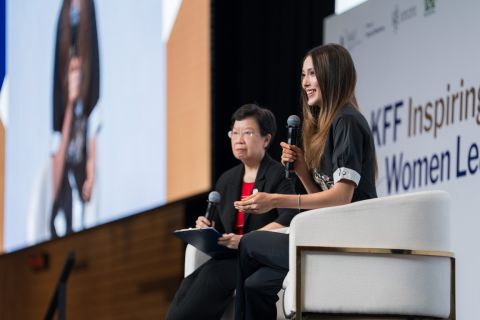
That self-awareness has helped her approach unfamiliar situations with greater confidence. She also stressed the importance of staying open to new experiences rather than assuming that achievement in one area provides all the answers. Resilience, adaptability, and the ability to learn from setbacks have proved useful both on and off the slopes.
Her reflections echoed a question central to higher education: how can universities prepare students to make sound decisions when they enter unfamiliar territory? Academic knowledge provides an essential foundation, but students must also learn to assess their capabilities, recognise their limitations, and exercise independent judgement.
Finding belonging through competition
As the only girl on her childhood ski team, Ms Gu wanted what many young people seek: friendship and acceptance. Skiing became a way to connect. The teammates trained together, attempted difficult manoeuvres, and encouraged one another through success and failure.
She recalled being the first among them to “slide a rail” – to glide along a narrow metal bar on her skis. Her teammates celebrated, then tried it themselves; by the end of the day, everyone had managed the feat. What stayed with her was not being first, but how one person’s success encouraged the whole team to attempt something new.
“Competition is about pushing each other to be better, and it's about feeling empowered to try,” she said. For Ms Gu, competition is not simply about winning. It means being willing to go first when failure is possible, while taking genuine pleasure in seeing others succeed.
She applies the same thinking to opportunities for women: recognise your own strengths while helping others advance. “It's about uplifting the entire community so that every single person ends up being better – in the way that a rising tide raises all ships,” she said.
Learning to make her own choices
Ms Gu also spoke about her mother’s influence. Growing up, she was introduced to interests ranging from skiing to music and science but was not directed towards a single pursuit. “So, when I was young, [my mother] gave me the choices, and then when I was a little bit older, she gave me the freedom to make the choices,” she said.
That progression gave her both the experience to understand her options and the independence to decide which to pursue. As she grew older, their relationship evolved. Ms Gu now describes mother and daughter as “co-founders”, reflecting the mutual respect and open discussion that characterise their partnership.
They do not always agree. Both are willing to debate, listen to the other’s reasoning and reconsider their positions. Crucially, Ms Gu said, her mother did not make decisions for her. The example carries a lesson for educators and mentors: helping young people develop requires knowing when to offer direction and when to let them decide.
Building connections beyond the conversation
The dialogue reflected the KFF Inspiring Women Leadership Series’ aim of providing a platform for women’s perspectives and encouraging discussion about leadership, opportunity, and personal development. This commitment will continue through the SMU Women Alumni Group, whose planned activities include structured group mentoring, panel discussions, networking sessions, and family-friendly events.
For those at the dialogue, the most useful takeaway may not have been how to replicate an Olympic champion’s success, but how to create the conditions in which more people can discover what they are capable of – and gain the confidence to choose what comes next.