

Transforming the flipped classroom with PromptTutor
The flipped classroom is a concept that has long appealed to universities seeking to make better use of face-to-face time. Students do the readings and prepare independently; instructors lead discussion, debate, and application in class. Yet at scale, the model has exposed a persistent weakness: students often struggle alone, motivation slips, and questions surface too late to shape learning meaningfully.
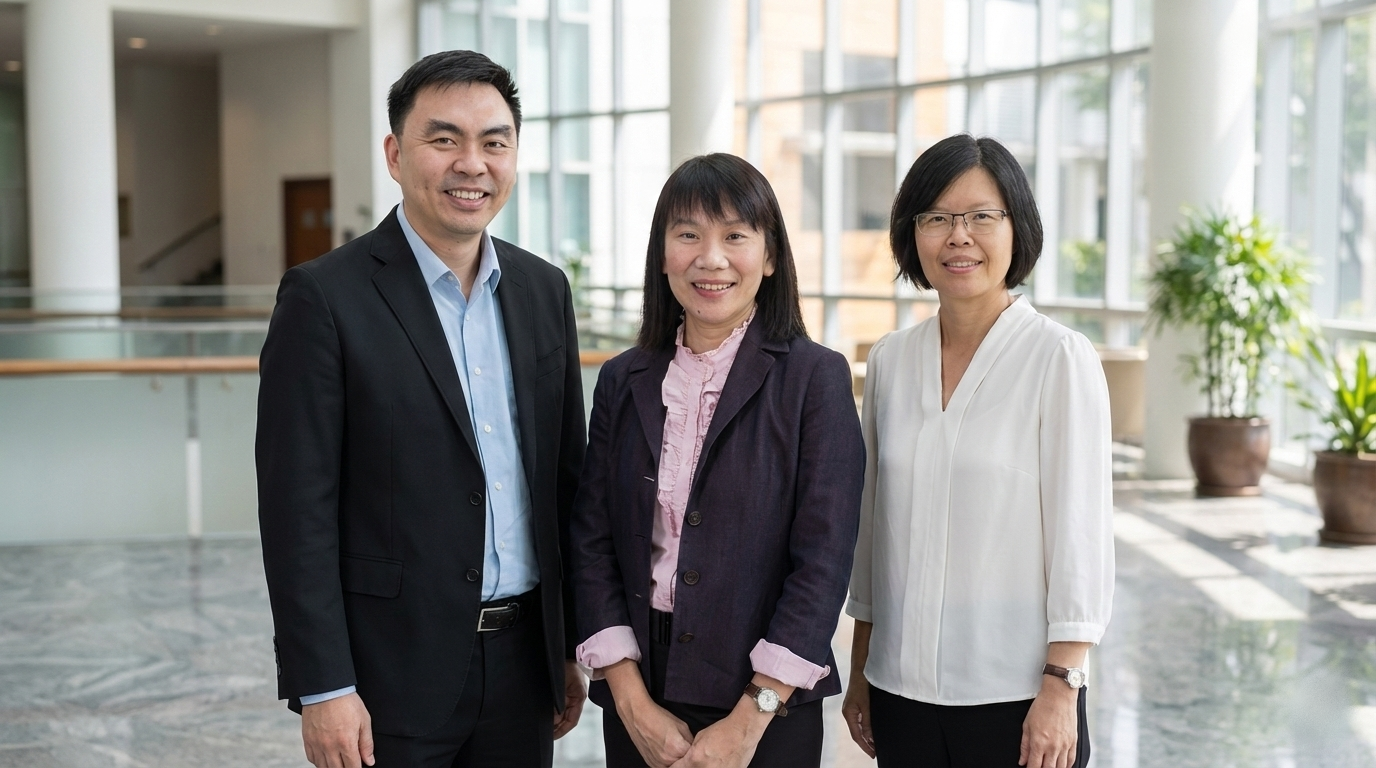
At SMU, this challenge became the starting point for the PromptTutor Project. SMU Associate Professor Ouh Eng Lieh, along with fellow SMU Associate Professors Lo Siaw Ling and Tan Kar Way, worked together to develop PromptTutor, an educational tool grounded in learning science and shaped by classroom realities. The tool’s aim is precise: to strengthen pre-class learning so that in-class time can fulfil its promise.
“In flipped classroom learning, students are expected to review materials before attending class. However, without the presence and guidance of an instructor, they often face unresolved doubts or questions,” Professor Ouh explains.
“Instructors, on the other hand, cannot be available around the clock to address these concerns. Studies have shown that delayed feedback significantly reduces students’ learning motivation.”
PromptTutor addresses this gap directly. “Our research aims to solve this issue by developing an AI chatbot pre-loaded with the course materials to provide timely support for students' questions.”
Research-driven design grounded in SMU’s teaching philosophy
The intentional design of PromptTutor is what truly distinguishes it from other chatbots. It was developed within SMU’s teaching and learning ecosystem – with research engineer Zhang Yuhao and students Adam Ho Chong Jee (postgraduate) and Guo Zhetao (undergraduate) involved in the development and evaluation. The tool aligns closely with instructor-defined learning outcomes, structured using Bloom’s taxonomy framework for categorising educational goals.
“[It] outlines various levels of learning complexity, providing a framework that students can use to guide their learning journey,” Professor Ouh says. “By integrating instructor-defined learning outcomes in a gamified manner, we can enhance student motivation during their interactions with the chatbot.”
This alignment ensures that pre-class learning remains focused, purposeful, and accountable, and the impact has been rigorously measured, with the study demonstrating a significant improvement in students’ quiz performance and motivation compared to the more traditional flipped-classroom method.
The results have been published in a paper at the international non-profit Association for Computing Machinery conference titled PromptTutor: Effects of an LLM-based Chatbot on Learning Outcomes and Motivation in Flipped Classrooms by the SMU team.
Supporting educators while advancing equity
At SMU, PromptTutor is set to be positioned as a first layer of support for teaching, rather than a replacement. By giving educators deeper insights into where student doubts lie in a flipped-classroom setting, they will be able to identify and provide appropriate support to students who require it.
The tool also enables longer-term improvement by helping educators to refine and enhance their teaching materials based off the common concerns that students have regarding the lesson material. The insights drawn from student interactions can also help to make class time more productive by tackling the points of concern.
What sets PromptTutor apart from the use of other AI such as ChatGPT is it has been built specifically for educational accountability.
“Two key areas are crucial for achieving learning outcomes: learning context and gamification,” Professor Ouh says. “PromptTutor is configured with the specific learning context (eg, software design patterns) and focuses on helping students meet the learning objectives within that context.”
“Additionally, we have incorporated gamification strategies to motivate students to persist in achieving these learning outcomes, which are based on Bloom’s taxonomy levels of learning complexity.”
Looking ahead, Professor Ouh sees a broader role for such tools within SMU’s commitment to inclusive education. “I believe PromptTutor effectively addresses a major challenge in flipped-classroom learning by providing timely feedback,” he says. “This tool also has the potential to enhance learning equity, particularly for students who may not have the financial means to access paid AI tools.”
But the team’s ambition remains grounded. “By leveraging PromptTutor to motivate student learning on the topics that can be covered before class, we can then introduce more advanced or complex topics that require educators' presence to facilitate and guide.”
See also: Innovating learning with ChatGPT-based Prompt Tutor | Office of Research Governance & Administration