

SMU establishes Resilient Workforces Institute to address the pressures of an AI-driven economy
With artificial intelligence reshaping the nature of work, the conversation is quickly turning towards how institutions can respond to changing jobs. In Singapore, where workforce adaptability has long underpinned economic resilience, that challenge is becoming more acute.
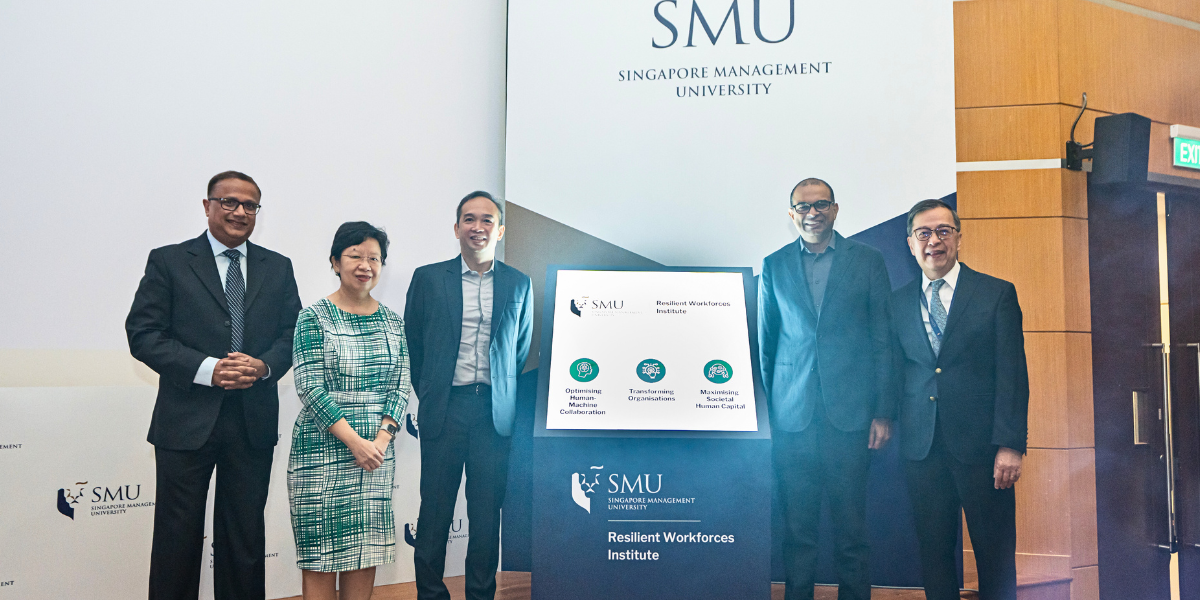
It was against this backdrop that SMU announced the launch of the Resilient Workforces Institute (ResWORK) — a new university-level research institute dedicated to strengthening workforce resilience and lifelong learning amid accelerating technological change.
The Institute is among the first in Singapore and the region to examine adult learning and the future of work through an integrated, interdisciplinary approach that brings together economics, management, behavioural science, and technology.
The launch, held on SMU’s campus, was officiated by Dr Janil Puthucheary, Senior Minister of State for Education and for Sustainability and the Environment, signalling the national importance of the initiative.
Research to empower thoughtful responses to workforce uncertainty
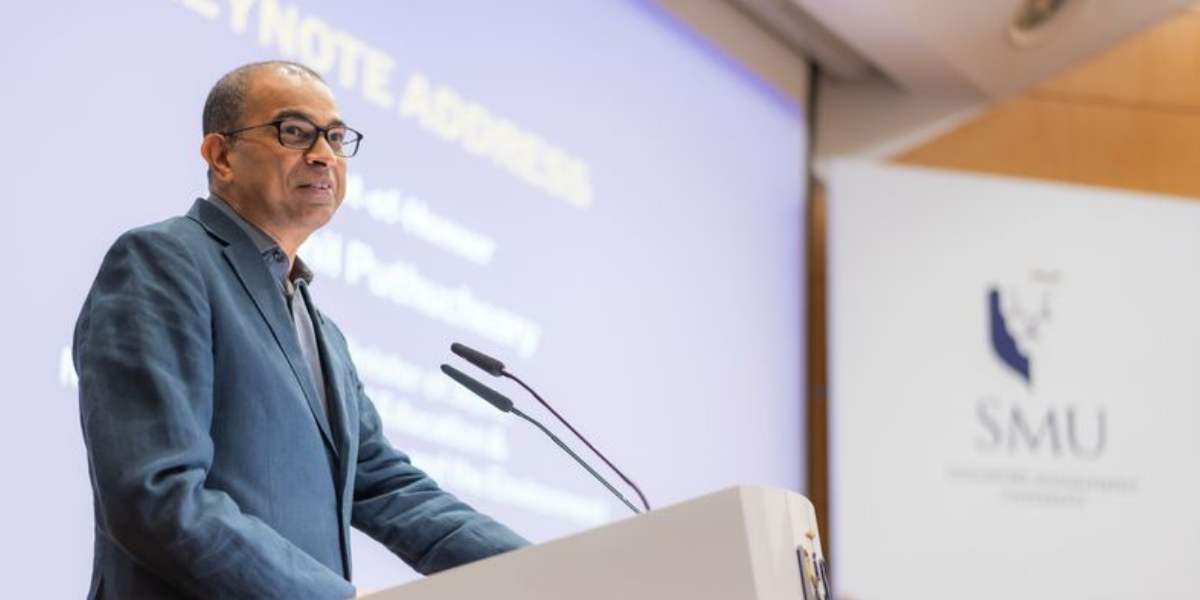
In his remarks, Dr Puthucheary Dr Janil highlighted the importance of partnerships with industry, enabled by research, in overcoming workforce disruptions brought about by artificial intelligence (AI) and digital technologies.
That emphasis on partnership sits at the core of ResWORK’s mission. Rather than treating technological change as a purely technical problem, the Institute positions it as a human and organisational one — requiring insights that cross disciplinary and sectoral boundaries.
ResWORK will serve as a focal point for workforce-related research across SMU, structured around three core pillars:
- Optimising Human-Machine Collaboration, examining how workers can learn, adapt, and perform effectively alongside AI, machines, and robotics
- Transforming Organisations, focusing on leadership, business processes, and work design in AI-enabled environments
- Maximising Societal Human Capital, analysing labour-market transitions and policies that support inclusive and sustainable employment
According to Professor Lily Kong, President of SMU, the Institute reflects the University’s long-standing commitment to research with practical relevance.
“The launch of the Resilient Workforces Institute reflects SMU’s commitment to research that matters – research that shapes public policy, informs organisational practice and ultimately strengthens the resilience of Singapore’s workforce,” Professor Kong said.
“By bringing together insights across disciplines, ResWORK will help Singapore and the region navigate the profound changes reshaping work and learning in the age of AI.”
Even ahead of its formal launch, the Institute had begun building momentum. More than 20 faculty members from SMU’s six schools are already involved, alongside several internationally recognised visiting scholars. Nine internally seed-funded projects and multiple externally funded programmes are underway, with total research funding exceeding S$1.5 million.
To anchor these efforts, SMU has committed S$5 million over five years, with the aim of securing an additional S$8 million in external funding within three years.
Collaborations with SkillsFuture and industry partners
A key milestone at the launch was the signing of a two-year Memorandum of Understanding (MoU) between SMU and SkillsFuture Singapore (SSG). The partnership will focus on research into how AI, digital technologies and shifting workforce preferences are transforming job tasks, skills demand, and career and learning pathways.
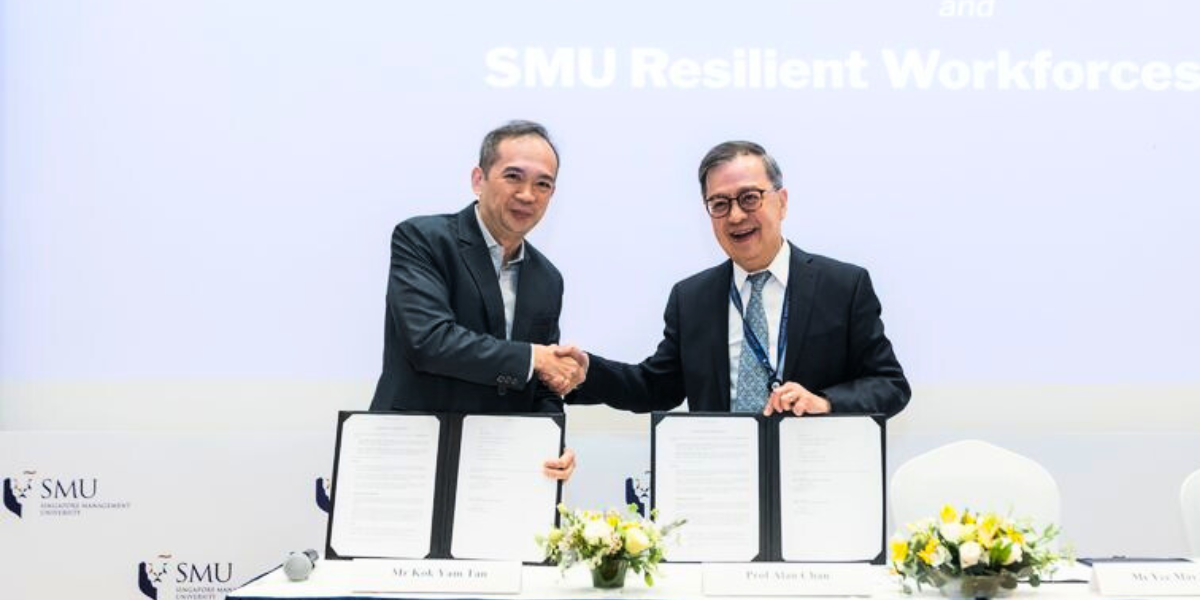
The collaboration will also examine how adult learning systems can be redesigned to improve participation, retention, and outcomes, and how organisations can integrate human and machine capabilities while preserving meaningful work.
Mr Tan Kok Yam, Chief Executive of SkillsFuture Singapore, described the partnership as essential to keeping Singapore’s national training system relevant.
“Our partnership with SMU on ResWORK is driven by a singular objective: to future-proof the national SkillsFuture system. By future-proofing, we mean that adult learning must adapt to the effects of emerging, rapidly changing technologies to workforce dynamics, so that the training received by learners best equips them for these changes. The system also must acquire a deep understanding of what employers want from their workers, where and how jobs have changed in nature, and what skills and attributes allow workers to best succeed. ResWORK seeks to help build such capabilities for our national adult training system,” he said.
At the launch, SMU announced a S$450,000 research contribution from Equinix, the global data infrastructure provider, supporting a flagship project on occupational exposure to AI within Singapore’s labour market. Led by Professor Li Jia, Dean of the School of Economics, the study will develop a transparent and publicly accessible index measuring AI exposure across occupations, industries and worker segments.
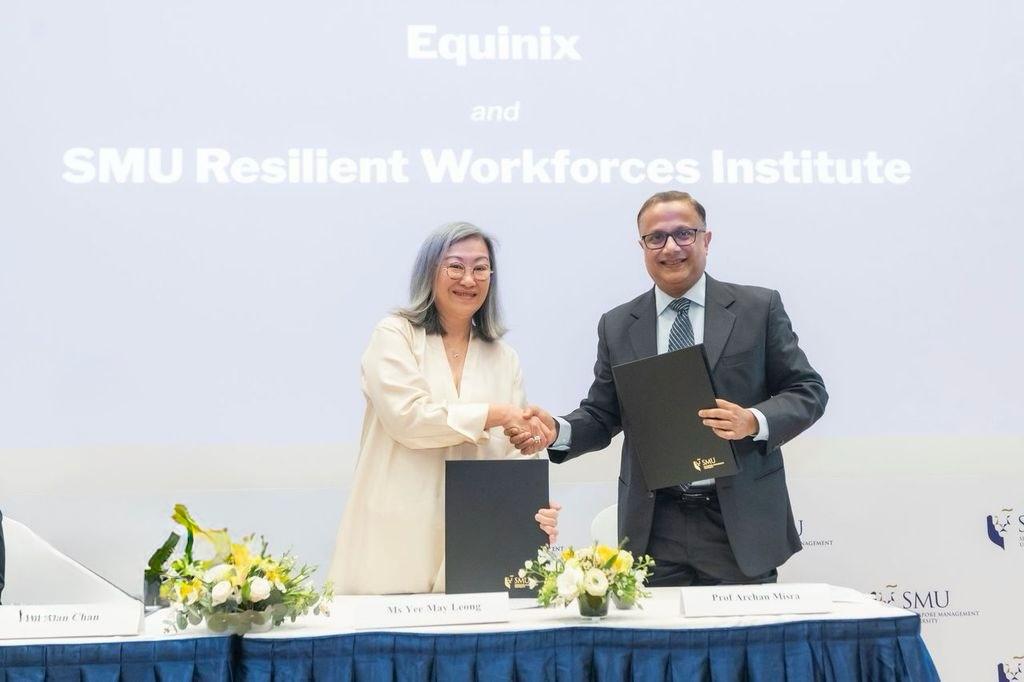
By analysing job advertisements and task requirements over time, the project aims to track how AI-related skills are evolving and provide insights to guide workforce planning, reskilling initiatives, and employment policy.
Ms Leong Yee May, Managing Director of Equinix Singapore, said the collaboration reflects a shared commitment to long-term workforce sustainability, saying, “Equinix and SMU have enjoyed a long and collaborative partnership aimed at building a sustainable digital future. By partnering with SMU on its Resilient Workforce initiative, we’re investing in research that will help position Singapore as a regional leader on AI and the future of work, informing the design of targeted policies like reskilling programs.”
The establishment of the Resilient Workforces Institute comes at a moment when the pace of technological change risks outstripping institutional response. By grounding research in partnership, data, and policy relevance, ResWORK aims to close that gap.
For Singapore, the challenge is not merely adapting to AI, but ensuring that workers, organisations, and systems evolve together. In positioning research as a cornerstone of that effort, SMU’s new Institute signals a clear intent: to help shape a workforce that is not only technologically capable, but resilient, inclusive, and prepared for the uncertainties ahead.