

Building Asia’s next generation of AI-literate business leaders
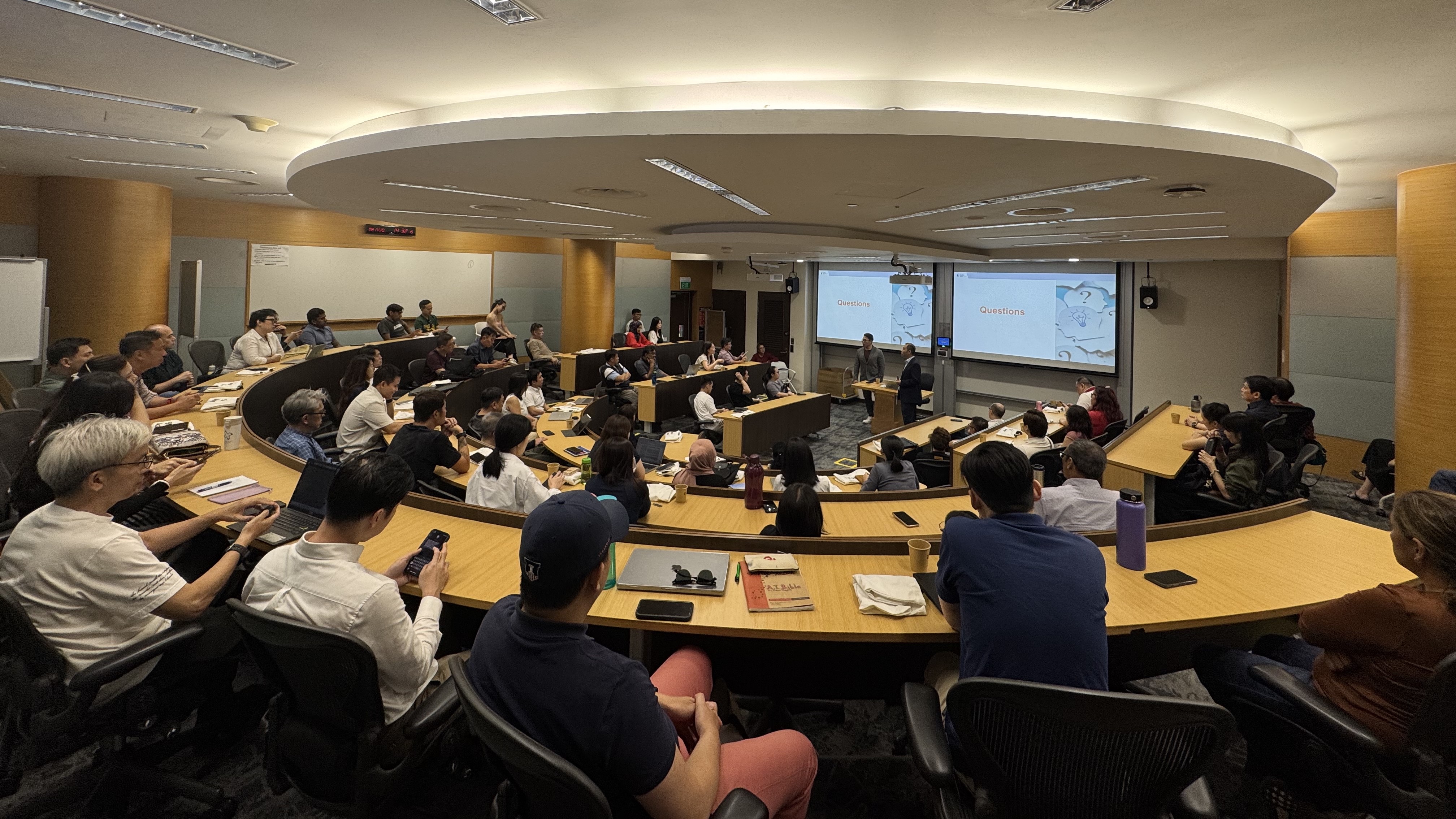
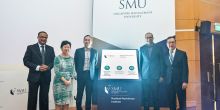
With regional AI governance developing rapidly, SMU is expanding its leadership in applied, industry-relevant AI education with two complementary new offerings: the new Master of Science in Business AI (MBAI) and the Industry Graduate Diploma in Generative AI, Large Language Models and AI Governance.
These programmes arrive against a backdrop of fast-moving governance developments, including Singapore’s recently introduced Model AI Governance Framework for Agentic AI, and are designed to address a growing gap: the shortage of business leaders who can exercise judgement, guide strategy and lead organisational change in an AI-enabled economy.
“The real AI skills gap isn’t merely technical—it’s translational,” said Professor Sungjong Roh, Academic Director of the Master of Science in Business AI programme at SMU. “While organisations may have access to AI tools, far fewer have leaders and executives who know how to work with them strategically, deploy them responsibly, and ensure they create value while effectively managing risk. This programme closes that critical gap.”
Designed for strategic leadership over technical specialisation
Unlike programmes centred on algorithm development or general management theory, the MBAI is explicitly business-first. It is designed for non-technical professionals who need to interpret AI’s implications, not build models from scratch.
The curriculum differentiates itself in three key ways:
- Integrated, interdisciplinary learning
Business strategy, data analytics, AI capabilities and ethics are taught together rather than as separate subjects. Students are trained to work between leadership, legal, operations and technical teams, where strategic decisions around AI increasingly reside. - Practice-oriented, interactive pedagogy
Courses such as Human–AI Collaboration, Data Storytelling and AI-Augmented Influencing, Change Management for Disruptive AI, and Innovations and Operations in Intelligent Online Marketplaces reflect real workplace demands. SMU’s seminar-style teaching emphasises discussion, peer learning and application, reinforcing its long-standing focus on applied education. - Alignment with national and industry needs
The programme supports Singapore’s broader economic priorities by developing talent in responsible AI governance, analytics-driven decision-making and organisational transformation, all of which are critical to maintaining competitiveness in an AI-enabled economy.
By design, the MBAI aims to produce professionals who can ensure AI investments lead to measurable business outcomes, developing “bridge builders” who can connect senior leadership with technical teams and ensure AI investments translate into business value.
Nurturing ‘AI bilingualists’ and providing modular pathways for a rapidly changing landscape
Running in parallel, the Industry Graduate Diploma (IGD) offered at the SMU Academy emphasises applied, real-world learning, through a stackable curriculum that offers flexibility to working professionals.
Designed specifically for non-technical business professionals, the IGD introduces learners to GenAI, large language models and AI governance through stackable, hands-on modules co-developed with industry partners. This modular structure allows participants to build capability progressively, in step with the rapid evolution of AI tools and regulatory expectations.
The curriculum develops ‘AI bilingualists’ who can design, deploy and govern real-world GenAI solutions, and apply them across functions including customer service, compliance, human resources and marketing. The IGD also provides a stackable pathway into the SMU Industry Practice Master of Digital Economy (IPMDE), SMU Academy’s flagship applied higher degree programme for working professionals seeking to upskill for the digital economy.
Jack Lim, Executive Director of SMU Academy, said, “This Industry Graduate Diploma strengthens Singapore’s pipeline of AI-ready business leaders. By embedding real-world client projects and governance frameworks into the curriculum, we go beyond teaching AI tools – we empower professionals to design and come up with AI solutions.”
SMU as a regional hub for industry-aligned programmes for professionals
Together, the two programmes reinforce SMU’s strength in flexible, industry-aligned learning pathways while positioning the University as a regional hub for what many organisations now require: professionals who are fluent in both business priorities and responsible AI execution.
Early feedback from industry leaders underscores the relevance of this approach.
“There is a clear differentiation from technical analytics degrees, given the programme’s strong leadership and ethics pillar,” said David Beal, Global Chief Marketing Officer at Jollibee Foods Corporation. “The industry capstone also creates a meaningful talent pipeline, while the Asia-focused perspective reflects SMU’s network.”
Jenny Choi, Director at Meta, noted that the programme’s emphasis mirrors real adoption challenges. “Its business-first positioning, with a focus on influence, communication and organisational change, prepares professionals to connect strategy with execution—rather than simply producing coders.”
Applications for the Master of Science in Business AI open on 2 February 2026 for the August 2026 intake. Further details are available here.