

SMU Chairman Piyush Gupta on trust, courage, and the future of Singapore finance
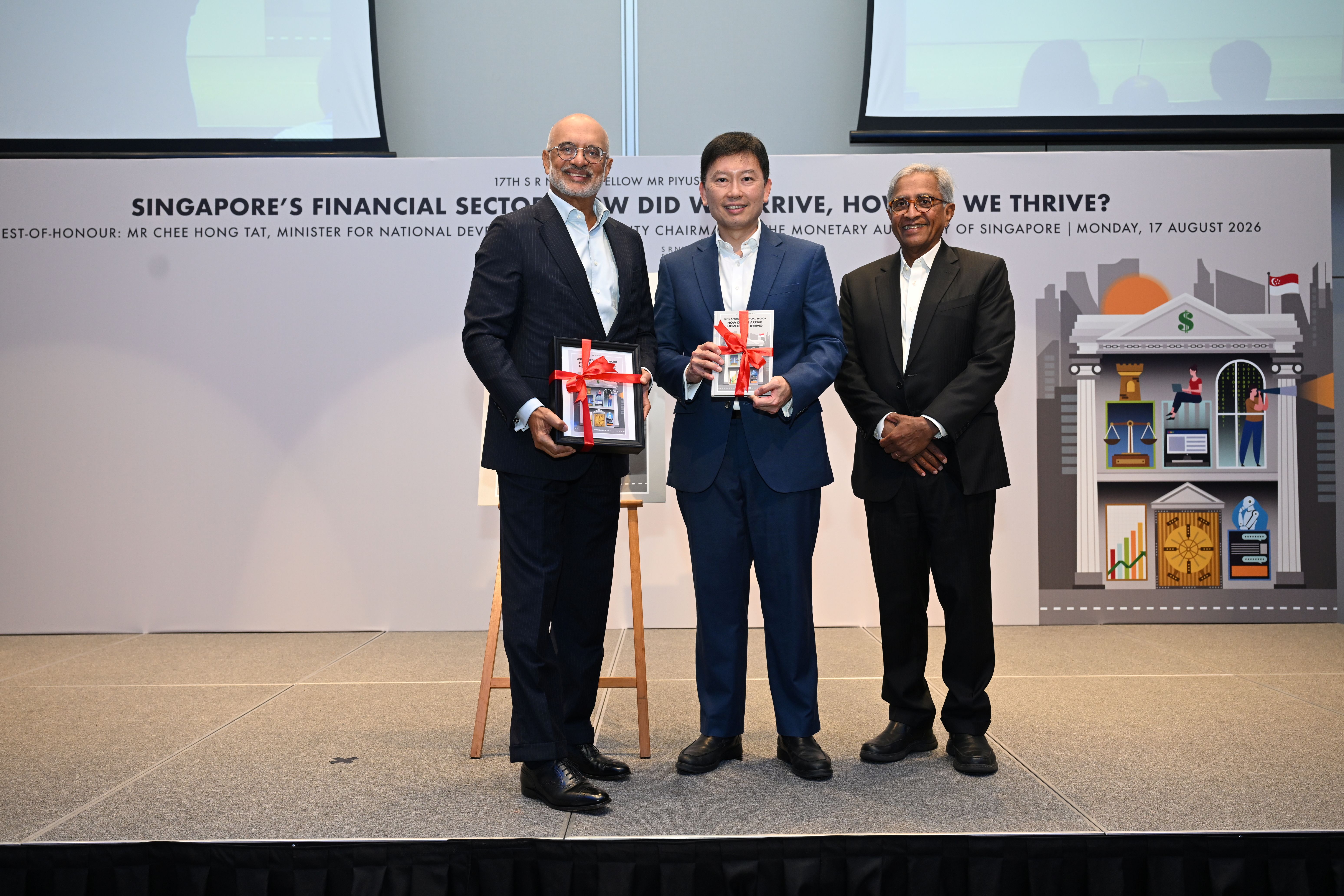
At the launch of his new book, SMU Chairman Piyush Gupta shares why Singapore’s next financial chapter requires institutional trust, courage and purposeful risk-taking.
Singapore’s rise as a global financial centre has been built on trust, discipline and sound judgment. For Mr Gupta, the next exciting chapter lies in building on that strong foundation — channelling the same pioneering boldness that shaped the sector to embrace fresh opportunities ahead. “This is the time that we have to be as bold as we were in the 1960s and 70s,” he said, urging Singapore to keep making calculated moves as technology, geopolitics and global competition reshape finance.
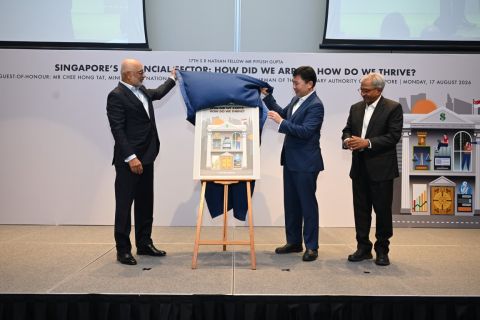
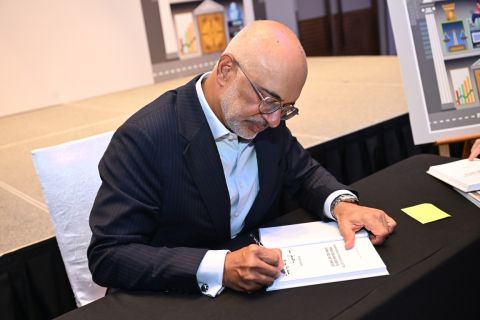
Mr Gupta was speaking at the 17 August launch of Singapore’s Financial Sector: How Did We Arrive, How Do We Thrive?, which brings together three IPS S R Nathan Lectures he delivered as the 17th S R Nathan Fellow for the Study of Singapore.
Drawing on four decades of banking experience, he traced the policy choices, partnerships and moments of purposeful risk-taking that helped Singapore become one of the world’s leading financial centres — and asked what it will take to remain indispensable in a more digital, fragmented and fast-moving world.
A financial system built on trust
“Trust is not a soft virtue in this business; trust is the product,” he said, noting that Singapore’s financial sector has earned its standing by balancing openness, innovation and stability.
The challenge, he noted, is that trust is becoming harder to protect. Digital tools can make financial services faster, more inclusive and more efficient, but they can also introduce risks that travel at unprecedented speed. For regulators and industry, the task is to keep pace without compromising confidence in the system.
Prudence with ambition
This balance came through in Mr Gupta’s reflections on the S$6.5 billion Equity Market Development Programme, introduced by the Monetary Authority of Singapore to strengthen the local equities market.
“I was a little sceptical about the EQDP in the beginning. I thought it wasn’t enough but I was proven wrong,” he said.
For Mr Gupta, the experience reinforced a broader lesson: prudence need not mean inertia. Singapore can protect the strengths that made it successful while continuing to test ideas, challenge assumptions and move early where it has conviction.
For the SMU community, that lesson resonates beyond finance. As Chairman of the University, Mr Gupta’s reflections point to a wider leadership challenge: how institutions can remain stable and trusted while staying ready to adapt.
The next financial frontier
Across the three lectures, Mr Gupta examined the policy choices that established Singapore as a financial centre, the digital infrastructure that transformed everyday transactions, and the technologies that could reshape global markets.
Artificial intelligence, blockchains, tokenised assets and new forms of digital money are challenging established models. Mr Gupta argued that Singapore should look beyond incremental experimentation and consider next-generation infrastructure, including tokenised capital markets and a digital Singapore dollar.
“The tension between innovation and stability exists particularly in the financial services sector,” Mr Gupta said, noting that Singapore’s challenge is to remain at the “edge of innovation” while protecting trust and stability.
Why standing still is not an option
Singapore’s financial reputation is worth protecting, but Mr Gupta encourages viewing it as a foundation for greater opportunities rather than a reason to avoid risk. In a sector being reshaped by technology and global uncertainty, he believes true progress comes from keeping up the momentum and moving forward with confidence.
For SMU, the reflections are a reminder that education, research and industry engagement all have a part to play in preparing future leaders for complexity — leaders who can pair innovation with judgment, and ambition with trust.
At a glance: Inside the 17th IPS-Nathan Lectures
Lecture I: Singapore’s rise as a financial centre was shaped by bold policy choices, strong public–private partnerships and a careful balance between openness, innovation and institutional trust.
Lecture II: Digital rails such as FAST, PayNow and SGQR have made transactions faster and more accessible, while also creating vulnerabilities, from liquidity shocks to sophisticated scams.
Lecture III: Blockchain, tokenised assets, agentic AI and digital money could reshape financial markets. Mr Gupta argues that Singapore should consider next-generation market architecture to remain an indispensable global financial hub.