

New SMU master's programme prepares talent for AI-driven economy
New SMU Master’s programme prepares talent for AI-driven economy
As artificial intelligence reshapes industries and public institutions, employers increasingly need professionals who can build models, interpret results, understand limitations and apply insights to complex economic and business decisions.
In response, SMU has launched the Master of Data Science in Economics (MDSE), Singapore’s first master’s programme to integrate economics, data science and artificial intelligence. It is designed to prepare graduates for roles at the intersection of technology, policy and decision-making.
Developed by SMU’s School of Economics, the MDSE combines advanced analytical training with economic reasoning — a valuable blend as organisations seek clearer, more responsible use of data.
Meeting a changing demand for talent
As AI and machine learning tools become more widely adopted, technical capability alone is often not enough, especially when decisions carry financial, social or policy consequences.
Economists today must analyse data, assess uncertainty, establish cause-and-effect relationships and evaluate the implications of different choices. These capabilities are increasingly important as organisations seek to turn AI-generated outputs into sound decisions.
Associate Professor Daniel Preve, Programme Director of the MDSE, said: “Globally, demand continues to grow for professionals with advanced skills in AI, machine learning and data science. At the same time, companies increasingly recognise the value of domain knowledge in economics.
“While many data science programmes emphasise predictive modelling and deployment, the MDSE places additional focus on causal inference and predictive uncertainty. These capabilities are critical when decisions depend on understanding not just what is likely to happen, but why.”
From data analysis to decision-making
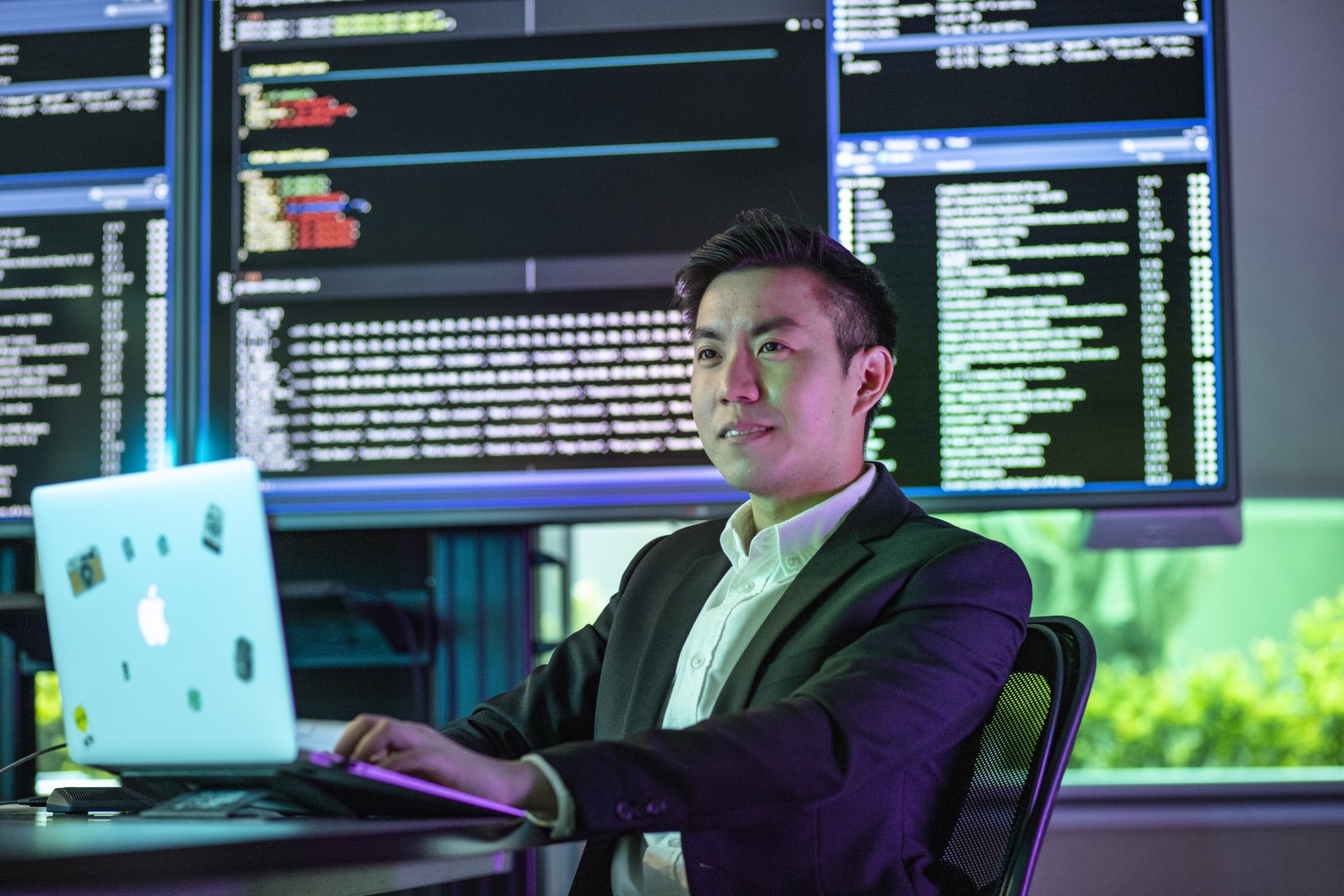
Students will work with large-scale datasets spanning numerical, textual and visual information, while learning how analytical findings can inform business and policy decisions. AI is woven throughout the MDSE curriculum, from foundation and core modules to electives. Students will learn to use AI-powered coding tools, apply generative AI responsibly in projects and GitHub portfolios, and document the prompts, tools and verification steps behind their work. They will also use AI and machine learning methods — including neural networks and deep learning — alongside econometric approaches to tackle questions in economics, finance and public policy.
The programme is open to both recent graduates and mid-career professionals, with foundational modules supporting those without prior programming experience. Through applied projects, students will build practical skills in econometrics, AI and machine learning, learn to distinguish between predictive and explanatory approaches, evaluate model uncertainty, and communicate insights effectively to stakeholders.
Addressing the gap between technology and context
As AI becomes more accessible, organisations are looking for professionals who can bridge technical analysis and domain expertise across areas such as financial services, consulting, government and technology.
The ability to interpret data within broader economic, regulatory and business contexts is becoming a key differentiator in the workforce.
“AI is changing how work is done, while making human judgement, interpretation and domain knowledge even more important,” said Associate Professor Preve.
“Graduates who can work confidently with data, understand its limitations, and apply it to real economic questions will be well-positioned across a wide range of roles.”
Potential career pathways include data science, economic analysis and policy roles.
Part of SMU’s broader AI education strategy
The launch of the MDSE forms part of SMU’s broader effort to develop postgraduate programmes that respond to evolving industry needs and technological change.
Recent initiatives include the region’s first technology-focused Doctor of Business Administration, offered jointly with Fudan University, and the Master of Science in Business AI. Together, these reflect SMU’s commitment to equipping professionals for increasingly data-driven workplaces.
SMU’s strengths in these areas are reflected in the QS World University Rankings by Subject 2026, where it was placed among the global top 40 for Business & Management Studies and ranked 52nd worldwide for Economics & Econometrics.
Eligible MDSE students will also have access to a range of scholarships and financial assistance schemes.
See also: New SMU Master’s Programme Prepares Talent for AI-Driven Economic Roles | SMU Newsroom