

What does “harmony” mean in a diverse society? Is it the total absence of conflict, or an ability to navigate nuances thoughtfully?
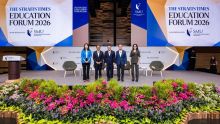
These questions set the tone at the inaugural lecture of the Kwan Im Thong Hood Cho Temple Chair Professorship in Inter-Religious Studies and Harmony on 18 March 2026 at the Singapore Management University (SMU) campus.
More than 90 guests from across academia, government, industry and religious communities gathered for the event, which was organised by the SMU College of Integrative Studies (CIS). It arrives at a time when societies across the globe are increasingly grappling with divisions across culture, religion and identity.
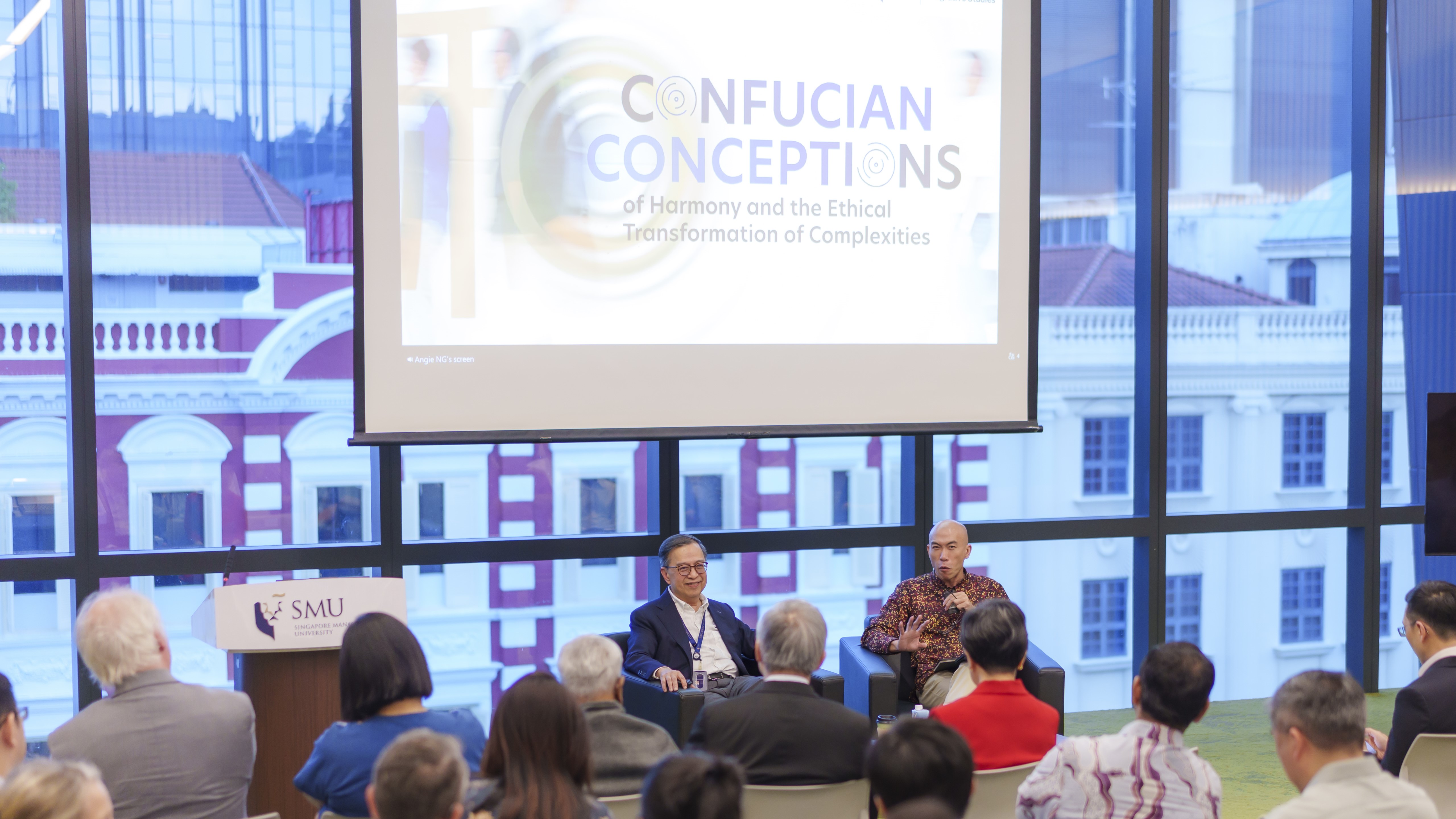
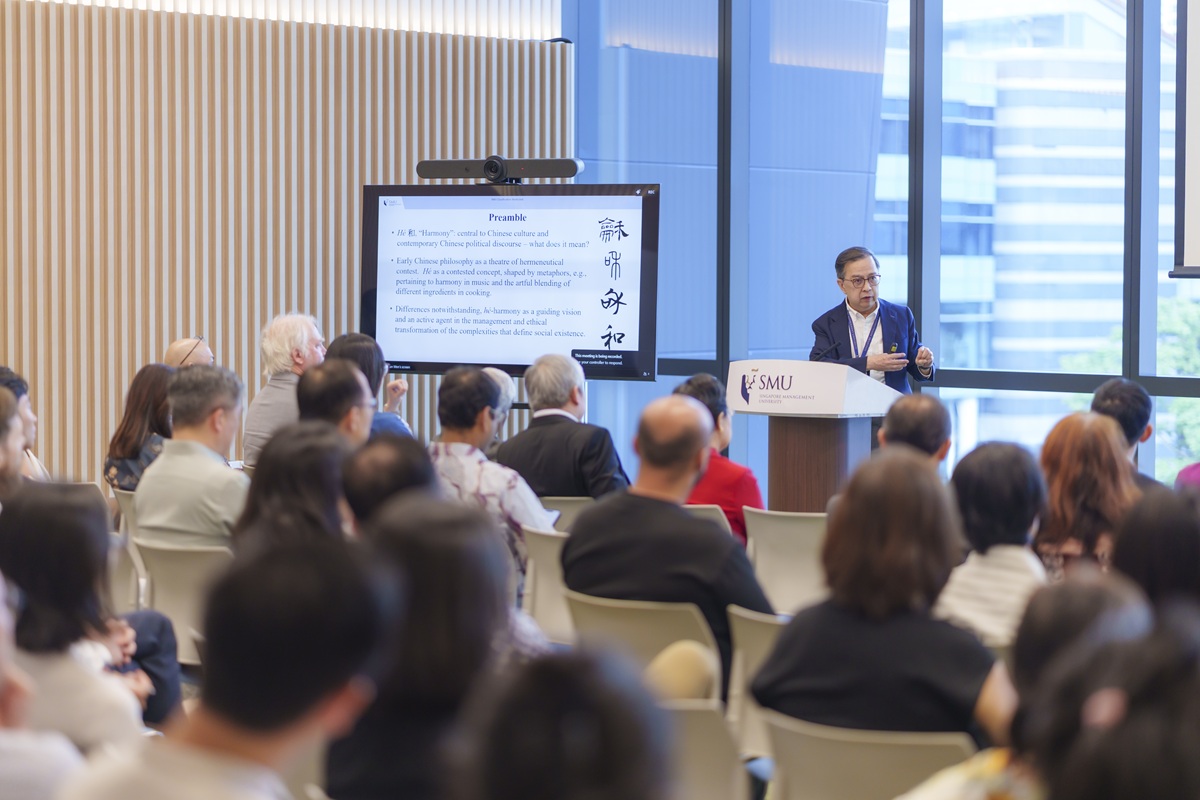
SMU Provost Professor Alan Chan delivered the lecture, titled Confucian Conceptions of Harmony and the Ethical Transformation of Complexities, offering a framework that moved beyond familiar assumptions.
In her opening remarks, SMU President Professor Lily Kong placed the discussion in a wider global context marked by both promise and unease.
“The world today is changing at a remarkable pace — in ways that inspire both optimism and concern. On one hand, we are witnessing unprecedented technological advances. Artificial intelligence, for instance, is reshaping how we work, learn, and live,” she said.
“At the same time, we are also seeing growing fractures in societies around the world. These divisions are often fuelled by fear and mistrust — across differences of religion, race, culture, and identity.
“Such fractures threaten the social fabric that generations before us worked hard to build and protect. It is precisely in this context that today’s lecture and this Chair Professorship matter so deeply.”
Her remarks underscored a central tension: progress has accelerated, but so too have the forces that pull societies apart. The question is not whether difference exists, but how it is handled.
Creating a space for research and dialogue on inter-religious relations
The Chair Professorship, supported by a S$2.5 million gift from Kwan Im Thong Hood Cho Temple, is intended to create sustained space for research, dialogue and engagement on inter-religious relations. It reflects a longer-term commitment rather than a one-off event.
“We aspire for SMU to be a place where ideas are shared openly, anchored in rigorous logic and defensible evidence,” commented Prof Kong. “Here, differences are approached with humility, and different individuals feel welcomed and respected. In an age where tribalism can easily take root, universities have a responsibility to chart a different course — one that fosters understanding, empathy, and shared purpose.”
The emphasis is deliberate: institutions of higher learning are positioned not only as centres of knowledge, but as conveners of difficult conversations.
Understanding the concept of hé (和)
At the centre of Prof Chan’s lecture was the concept of hé (和), commonly translated as “harmony” in Chinese philosophical thought. Drawing from early Chinese philosophy, he revisited its origins to uncover competing interpretations.
One early conception draws from music, where distinct notes and instruments are coordinated to produce a balanced composition. Another takes its cue from cooking, where varied ingredients are combined to create depth and complexity.
Elaborating on the concept of musical harmony, Prof Chan said: “Harmony is associated with a range of concepts such as rang (让) and shun (顺) that convey compliance or yielding to a higher purpose or direction, though Confucius asked for the song to be performed again, presumably to listen more carefully, which suggests that harmonising comes after discernment.”
He also used this concept to illustrate how traditional tonal harmony involved distinct constituents performing in concert towards the realisation of a pre-conceived goal.
While these metaphors have often been thought to be describing the same ideal, they may in fact point to different ways of understanding harmony. In revisiting these philosophical traditions, Prof Chan reflected on harmony not as the absence of difference, but as an active process of engaging complexity and bringing diverse perspectives into balance while preserving their distinctiveness.
“In fine cooking, active ‘blending’ (tiao 调) is needed to achieve not only balance but also renewal,” said Prof Chan. “Whereas the former sees harmony more as a desired end, the latter emphasises harmony as an ethical process. Not to suggest stark opposition, but logic of interpretation.”
This reframing shifts the idea of harmony from outcome to practice. It is not achieved once and preserved; it must be worked at, especially in contexts marked by difference.
For societies navigating religious and cultural diversity, this approach offers a more demanding but also more realistic model. It recognises that disagreement is not a failure of harmony, but part of the conditions under which it must be maintained.
Lessons for a diverse society
The discussion resonated strongly in Singapore, where interfaith relations and multiracial cohesion are often cited as foundational strengths. Yet these outcomes have depended on sustained effort rather than assumption.
The lecture suggested that harmony, in such a context, requires more than coexistence. It calls for active engagement, careful listening and a willingness to adjust one’s position without abandoning conviction.
Singapore’s approach, which is grounded in dialogue, mutual respect and shared responsibility, offers one example of how these principles can be applied. At the same time, the challenges faced elsewhere serve as a reminder that such equilibrium cannot be taken for granted.
An ongoing conversation
The Chair Professorship is designed to carry these discussions beyond a single lecture theatre. Embedded within SMU’s Core Curriculum, particularly in the Cultures of the Modern World basket, it introduces undergraduates to the complexities of religious diversity early in their academic journey.
Through collaborations with scholars, policymakers and community leaders, the initiative also seeks to contribute to wider global conversations on coexistence in an increasingly complex environment.
If the evening’s discussion offered a conclusion, it was a measured one: that harmony is neither passive nor automatic. It does not remove difference, nor does it require uniformity.
Instead, it asks for discernment before agreement, and effort before resolution.
In a period defined by rapid change and visible strain, that demand may be precisely what makes the idea of harmony worth revisiting.
See also: Why Harmony Matters More Than Ever Today | SMU Newsroom