

The CEO with a clinician’s heart: How Dr Mok Ying Jang reimagines eldercare
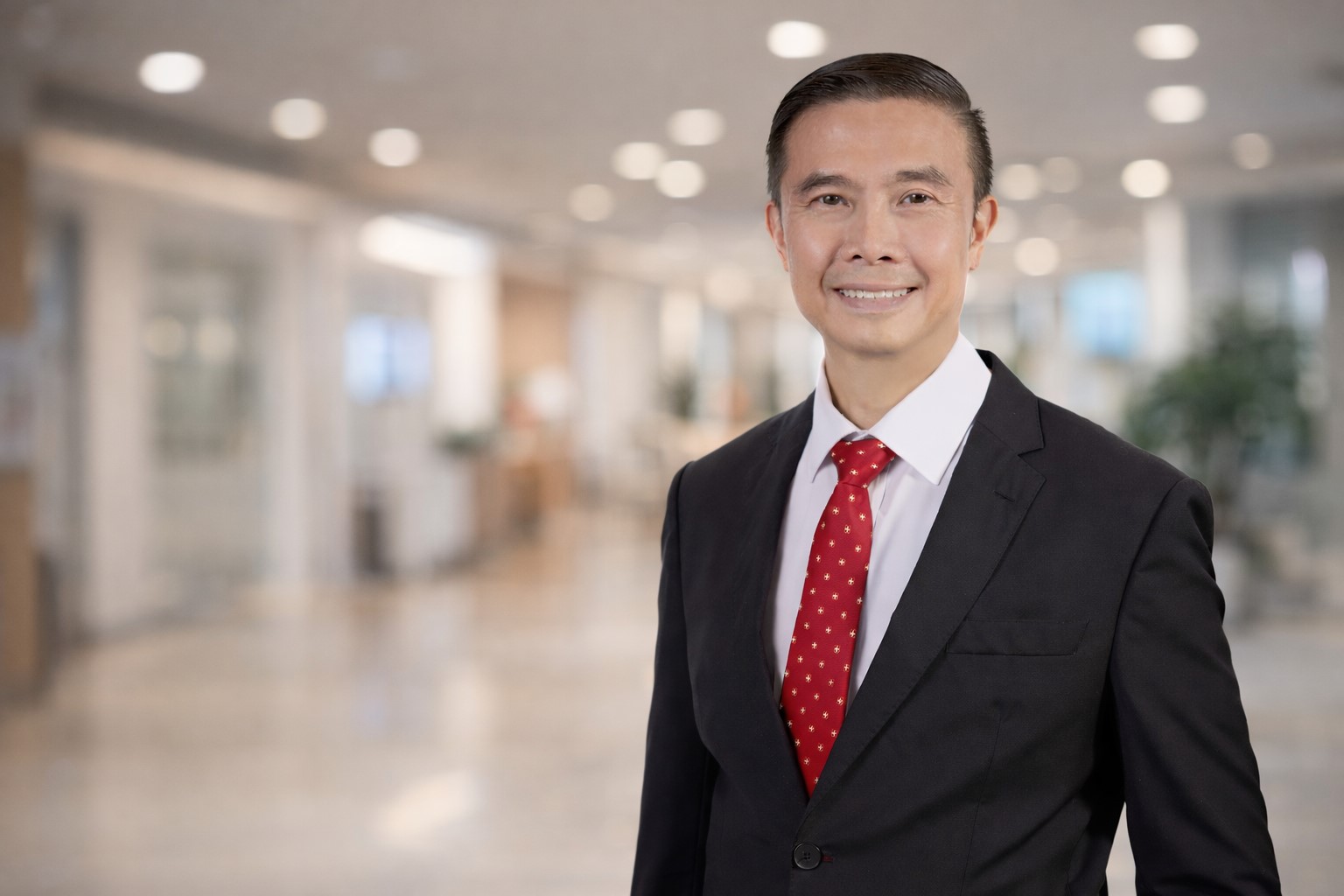
From venturing abroad to be a family physician in Shanghai to his appointment as the CEO of one of Singapore’s oldest charitable healthcare institutions, Dr Mok Ying Jang’s journey is one of radical empathy and strategic leadership. He shares how personal experiences and a pivotal Executive MBA from SMU have helped him bridge the gap between the worlds of compassionate care and corporate discipline.
In the hallowed corridors of healthcare administration, where talk often leans more towards metrics and fiscal sustainability, Dr Mok Ying Jang, Chief Executive Officer of Kwong Wai Shiu Hospital (KWSH), brings a different currency to the table: the language of human connection.
"My youngest son once asked me what I do every day in KWSH," shares the 2013 EMBA graduate.
"He was wide-eyed when I said I spend almost half my time daily talking and communicating with people."
For Dr Mok, interpersonal connection is the most critical tool in his arsenal. It’s how he engages with staff to understand their challenges and aspirations, reviews the effectiveness of patient programmes by observing residents' responses firsthand, and interacts with the volunteers who form a vital "pillar of support" for the hospital.
"Communication is a powerful tool to engage — and a strong reminder of the human core of our work," he insists, "...it motivates me to ensure that our policies, programmes, and decisions are relevant, and always reflect empathy and respect."
A foundation of compassion
Such deep-seated empathy wasn't nurtured in a boardroom or even at a patient’s bedside. Instead, Dr Mok traces his passion for healthcare back to two formative events in his youth: The first was an act of profound compassion, when his family took in and cared for a three-month-old baby who had been abandoned by his parents from a wealthy but dysfunctional family.
"Though it was only for a few months, the love and care we gave him left a profound impression on me," he recalls.
The second experience was a lesson in duty and dignity amid sorrow. During the final year of his maternal grandmother’s life, she came to live with his family under "very difficult and heartbreaking circumstances", suffering from multiple medical conditions.
"These experiences taught me that healthcare is never just about treating illness," Dr Mok reflects.
"It’s intimately tied to family, socioeconomic conditions, and the broader community."
From clinician to strategist: The SMU pivot
While he propelled himself through a career across several public, private, and overseas institutions, Dr Mok realised that the suffering he witnessed was often symptomatic of larger, systemic “cracks”. This growing awareness nudged him toward administration, a transition crystallised by his decision to pursue an Executive Master of Business Administration (EMBA) at SMU.
"Professor John Lim, one of the many CEOs I had the privilege to work with, made a pivotal decision in approving my application," recalls Dr Mok, who has previously helmed senior positions in Mount Alvernia Hospital and the National Healthcare Group Polyclinics.
The SMU EMBA programme, he says, "broadened my perspective and laid the foundation for my transition into leadership and business roles in healthcare".
Surrounded by peers from a spectrum of industries, Dr Mok found new lenses through which to view healthcare. The interactive, seminar-style pedagogy, a hallmark of the SMU experience, fostered an environment of "critical thinking, respectful debate, and the sharing of diverse perspectives". Here, the clinician learned the language of corporate strategy, financial management, and organisational behaviour — not as a replacement for his medical ethos, but as a powerful complement to it.
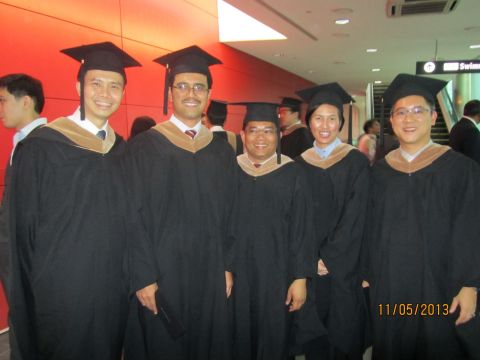
"Business and management knowledge brings structure, discipline, and innovation to healthcare delivery," he explains.
It provides the frameworks to optimise resources, to develop high-performing teams, and to scale initiatives that deliver real value. In a sector where "demand often outpaces supply and decisions have direct impact on lives", he argues, this knowledge becomes essential, fostering "the boldness in making changes without fear or favour".
Leading with head and heart
Today, Dr Mok stands at the helm of one of Singapore's oldest charitable healthcare institutions. Founded in 1910 by Cantonese merchants to serve poor immigrants, KWSH has evolved into a cornerstone of the nation's eldercare landscape, operating nursing homes, community care centres, and even offering Traditional Chinese Medicine services. As CEO, Dr Mok is tasked to act as steward of this rich heritage while navigating the complex demands of Singapore's ageing population.

"Some private healthcare providers may focus on profitability and shareholders’ interests, and while public healthcare institutions serve national mandates, charity organisations must deliver quality care that is deeply mission-driven while remaining financially sustainable," he notes.
His diverse experience, coupled with his SMU education, has equipped him to "evaluate trade-offs, to lead with data, information and accountability, [and give me] the perspective to make decisions that are both values-based and results-driven".
Perhaps the most crucial takeaway, he reflects, is "leadership resilience in adversity". The ability "to pivot, quickly and when needed, and to lead others through uncertainty with clarity and confidence" is also a quality that defines his leadership, especially as KWSH deepens its reach into communities and forges new partnerships, such as a recent pilot project with the Singapore University of Social Sciences (SUSS).
For those contemplating a similar leap, Dr Mok advises deep self-reflection to aid in that giant move. "Understand what drives you, what you hope to contribute, and the kind of environment where you thrive." He sees further education not just as a means to acquire knowledge, but as an investment in terms of "return on values". After all, his EMBA helped him emerge as a leader equipped to not only manage an institution, but also to reimagine what it means to care for a community.
The SMU Edge: Forging a Resilient Leader
Dr Mok Ying Jang’s transition from clinician to CEO was powerfully shaped by his time at SMU. The EMBA provided more than just business knowledge; it offered a transformative toolkit for leadership:
- A new perspective
The programme broadened his viewpoint, laying the foundation for his shift into healthcare leadership. SMU’s interactive, seminar-style classes with peers from diverse industries taught him to view complex challenges through different lenses.
- Strategic skillset
Dr Mok acquired a foundation in financial management, human capital, and organisational behaviour, and learned to apply the discipline of business to healthcare delivery — optimising resources and scaling initiatives with the "boldness in making changes without fear or favour". - A Lifelong Network
The friendships forged at SMU provided a "lifelong privilege" and a "unique safety net" of peers at the pinnacle of their fields, reinforcing his belief that solutions can always be found.