

Cultivating justice: Contributing to the nation’s conscience from the ground up
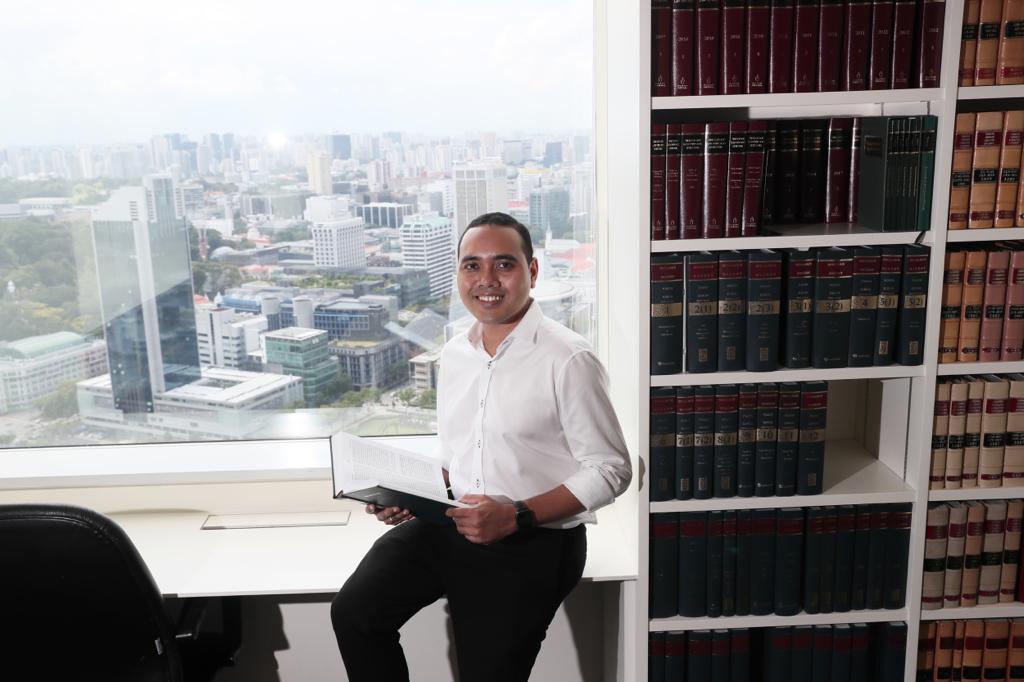
For Singapore MP Zhulkarnain Abdul Rahim, justice goes beyond prestige or punishment. It’s about people, and our collective commitment to building a society that champions their potential.
What kind of advocate works to make his own mission obsolete? To Zhulkarnain Abdul Rahim, that is the ultimate measure of success. His life's work is a testament to a different kind of justice — one that moves beyond temporary fixes to addressing root causes.
But this path was far from preordained. In his teen years, Zhulkarnain was drawn to archaeology and adventure, not legal doctrine or policymaking. Law felt distant — elitist, even.
It was only after a nudge from his father that he applied to read for a Bachelor of Laws at the National University of Singapore. Despite not owning a suit and having no lawyers in his family, he made it through the interviews. “I wasn’t a conformist. I asked questions. They liked that.”
It was years later, after becoming a practicing litigator, that he returned to school — this time at the Singapore Management University. Enrolling in the University’s inaugural Master of Laws in Islamic Law and Finance, he found something different: a space that challenged his thinking and deepened his understanding of justice. “It wasn’t for the certification. Clients would come anyway. I wanted to broaden my perspective.”
Law at ground level
Zhulkarnain’s early career at Dentons Rodyk — one of Singapore’s oldest established law firms — was spent in international arbitration, filled with complex cases, high-value clients, airtight arguments. “All faceless corporate clients,” he said. But one day, a client asked him: “What have you done for the community?”
That question sparked a pivot in his practice.
He started volunteering at legal clinics and joined the Legal Aid Bureau, taking on unfamiliar areas like Syariahdivorces and child protection. “It was totally out of my comfort zone,” he admitted. “But these were real people.”
In one landmark case, he argued on behalf of an abused woman with no legal claim to her home — she wanted a divorce but had been told by other lawyers that she would be left with nothing. Since her name wasn’t on the HDB lease, she would not be able to make any claims for the proceeds from the sale of the matrimonial flat. But Zhulkarnain made a novel argument — that without the marriage, there would have been no family nucleus to qualify for the grant.
The appellate court agreed and awarded her half the sale proceeds of the HDB flat in the divorce.
The argument that convinced the court didn’t just help her. It set a new precedent moving forward, giving women in similar situations legal footing.
From casework to cause work
With time, the pattern became hard to ignore.
“These weren’t just people slipping through the cracks — they were being pushed,” he said. “We kept pulling people out of the river, but I started asking: ‘Who’s throwing them in?’”
The metaphor shaped his next steps. He started volunteering at Casa Raudha, one of Singapore’s four crisis shelters for women and children and helped launch Defence Guild SG to support victims of abuse, both online and offline, sexual and non-sexual. He also joined Yellow Ribbon Singapore and the National Council Against Drug Abuse; and advocated for reintegration pathways for former offenders, whom he prefers to call “desisters” — people who overcame, who didn’t just “offend”.
And always, he brought his legal tools upstream. “We can’t just fix the vehicles — we have to fix the roads.”
When the personal breaks through
Zhulkarnain often left home after hours, only telling his children that he was “going to help people”.
Then, one day, his eldest daughter stopped him at the door. “She asked, ‘When will you help me?’ That broke my heart.”
So, he brought her with him to the shelter. “She asked why the children had to leave their homes,” he recalled. “And then she said, ‘If the daddy did something wrong, why are [the children and the mothers] the ones moving out?’”
That one question from his daughter came to embody his entire philosophy: justice must move beyond reaction — it must be rooted in structural change.
Politics, purpose, and proximity
Zhulkarnain didn’t enter politics to build a career. “Private practice was comfortable,” he said. “But I realised — if good people don’t go upstream, we’ll keep firefighting.”
As a Member of Parliament, he advocated for structural changes. He proposed making shelters more visible — like Amsterdam’s Orange House. “Why should survivors hide? They’ve done nothing wrong.”
He also helped launch the “Break the Silence” campaign in 2016, training frontline workers to recognise signs of domestic abuse. “It’s not about being nosy,” he said. “It’s about being alert enough to act.”
SMU and the shift in lens
In 2011, Zhulkarnain joined the inaugural cohort of SMU’s Master of Laws in Islamic Law and Finance. “It was a laboratory of ideas,” he said. “The faculty came from everywhere — France, Canada, New Zealand. My classmates included bankers, regulators, even a former parliamentarian.”
He had studied Islamic Banking & Finance law in Malaysia, but the SMU approach offered a welcome expansion in perspective. “They had the foresight to bring in non-Muslim lecturers from different jurisdictions. It made the ideas applicable to a secular state like Singapore.”
The experience left a mark. “Learning isn’t just to earn,” he said. “It’s to teach. And teaching is a form of giving.”
The three Cs: core, career, community
Zhulkarnain’s personal mantra — Core, Career, and Community — guides his life today.
At the centre is Core: his family. “They’re my anchor,” he said. “They remind me who I am.”
His Career, in turn, reflects those values — with his team at Dentons Rodyk built not just on capability, but culture. “You build people who work with you, not just for you,” he said.
And then there is the Community — where he focuses a lot of energy. Whether it’s helping women launch microbusinesses, advocating for inclusive hiring of desisters (formerly incarcerated individuals), or reshaping Singapore’s approach to domestic violence, his vision is clear: dignity, not dependency.
“Predisposition,” he often says, “is not predetermination.”
A life recalibrated
In 2022, life tested him again. His wife endured a high-risk pregnancy. Their son was born two months early. “The doctors asked who I wanted to save,” he said. “I asked them to try to save both.”
His wife went into the ICU. His son spent two months in the NICU.
“I was going between High Court, Parliament, and the hospital,” he said. “Every day was a prayer.” At the hospital, he found hope in a hallway lined with handprints of other premature babies who had made it.
Today, his son is thriving. “Every day is a bonus,” he said. “And a reminder that life calls us to something higher.”
Justice that endures
In court, in Parliament, and in the sheltering spaces in between, Zhulkarnain has lived out a life focused on justice that is less about verdicts than about visibility, and less about punishment than about possibilities.
His goal isn’t recognition. It’s reinvention.
“The happiest day of my life,” he said, “will be the day our shelters are no longer needed.” Until then, he’ll keep pressing upstream.
The SMU Edge
Zhulkarnain’s decision to pursue his Masters at SMU was in part fuelled by the students who had interned and worked under him at Dentons Rodyk. Through them, he observed the strengths of the SMU pedagogy even before he had the chance to experience it for himself.
Comparing our SMU interns to their peers, I found they were very forward looking, which I think is a function of how they were educated and exposed to real world issues on campus.
Zhulkarnain Abdul Rahim
- Nurturing well-rounded individuals through global exposure
The strong emphasis on discussion-based learning and global exposure helps give SMU students a broader perspective. This helps SMU graduates grow into well-rounded individuals that stand out from their peers.
- Immersion to varying perspectives
At SMU, faculty and students alike come from a wide range of backgrounds. This leads to a mix of different perspectives, sometimes from fields outside of your course of study, that can feed into new ideas and insights.
Timeline
2005 Conferred Bachelor of Laws, NUS
2006 Joined Dentons Rodyk
2009 Received Certificate in Islamic Banking & Finance, International Islamic University of Malaysia
2011 Conferred Master of Laws (LLM) Islamic Law and Finance, SMU
2016 Joined Casa Raudha, National Council Against Drug Abuse, Yellow Ribbon Singapore
2020 Elected as MP of Chua Chu Kang GRC
2021 Founded Defence Guild SG